Selected Case Studies

Most of these case studies began outside the formal boundaries of my formal role, as side quests sparked by something the organisation had not yet learned to see, name or prioritise. That is important because the ideas most likely to shape the future don’t arrive through daily delivery plans. They often begin at the edges, with early innovators, weak signals and uncomfortable questions. Nokia’s story is a reminder that companies can see disruption coming and still fail to respond. In the age of AI, leaders must create space for people who challenge assumptions, explore what sits beyond the roadmap and make emerging possibilities tangible.

For those doing that work, when someone tells you to stay in your lane and do only what you are paid to do, use your judgement. The work you are called to do often begins before anyone gives you permission. Ideas matter when they are tested, challenged and survive contact with reality, and and those who nurture them do not have to wait for permission to help them grow.

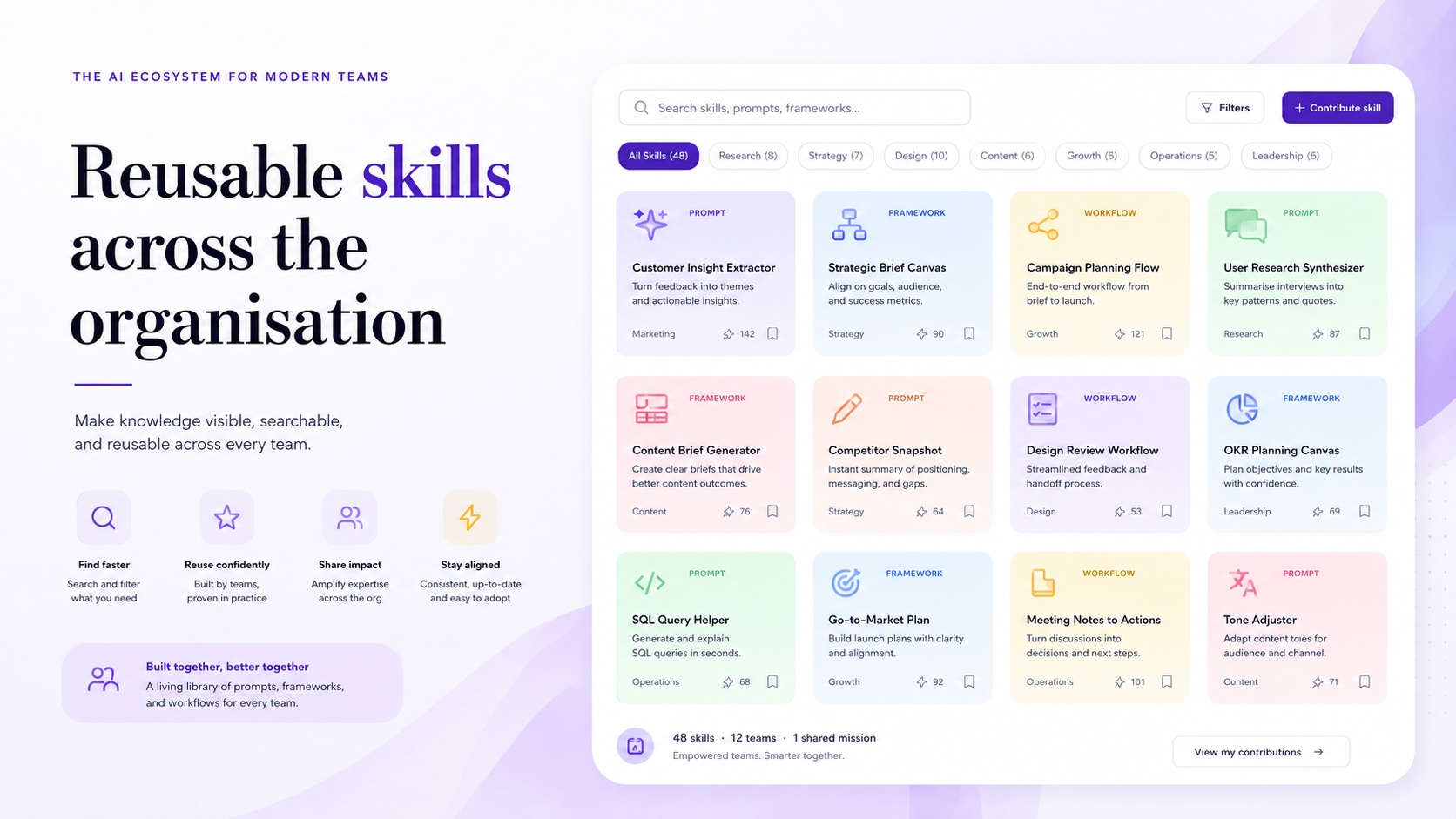
Case Study: The Agentic AI Hub, from AI experiments to organisational intelligence

Designing a human-centred hub for agentic work

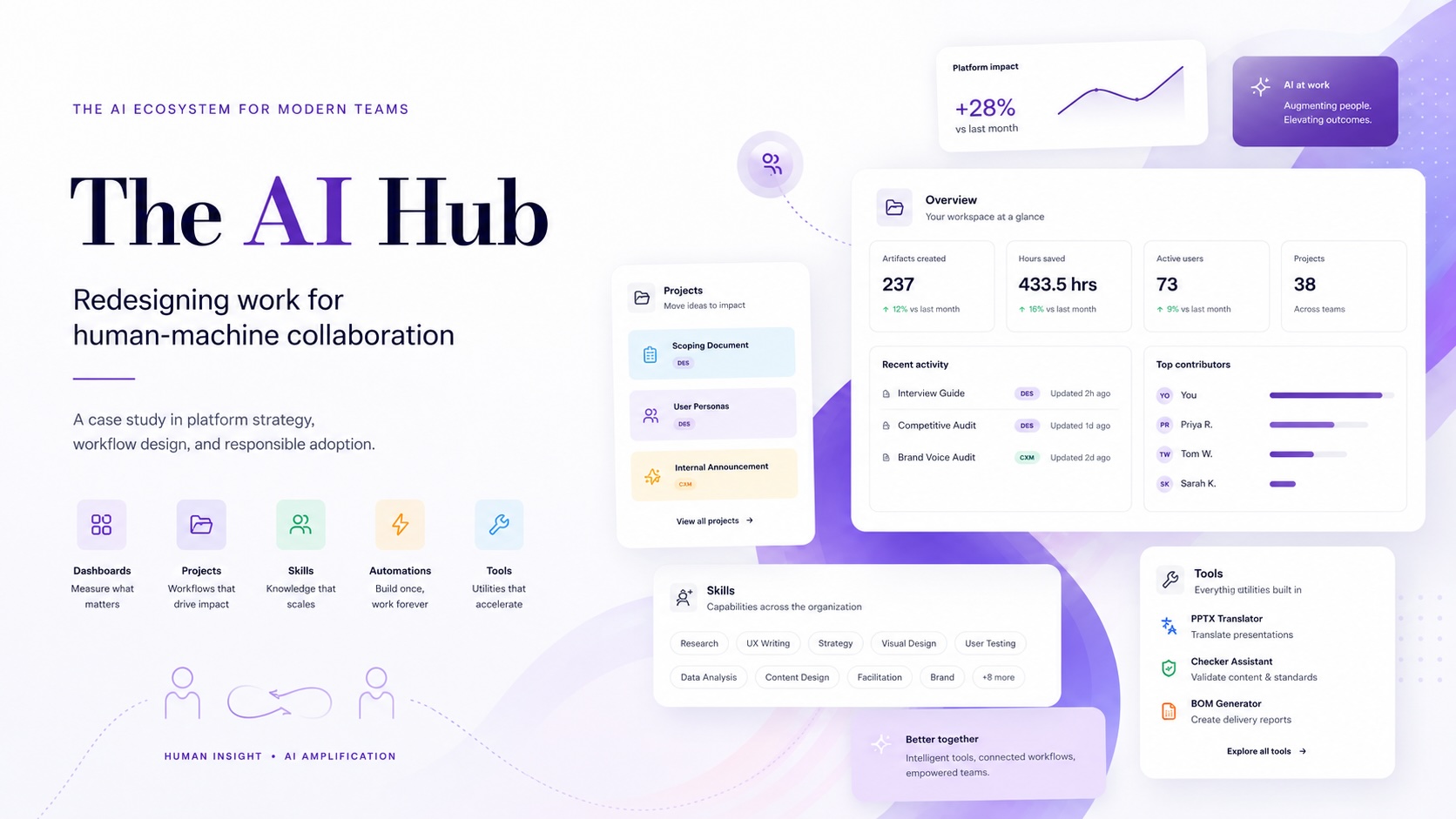
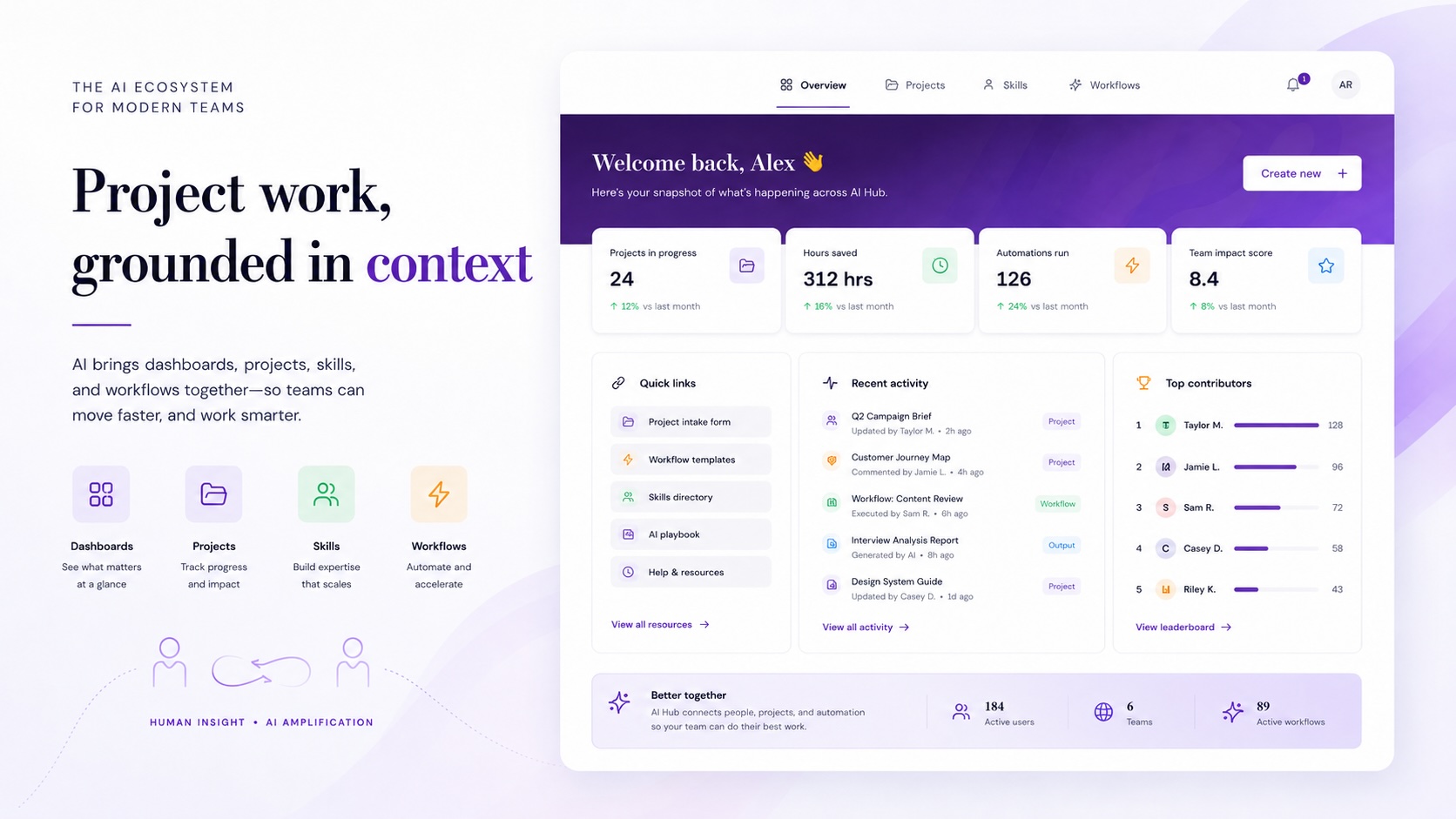
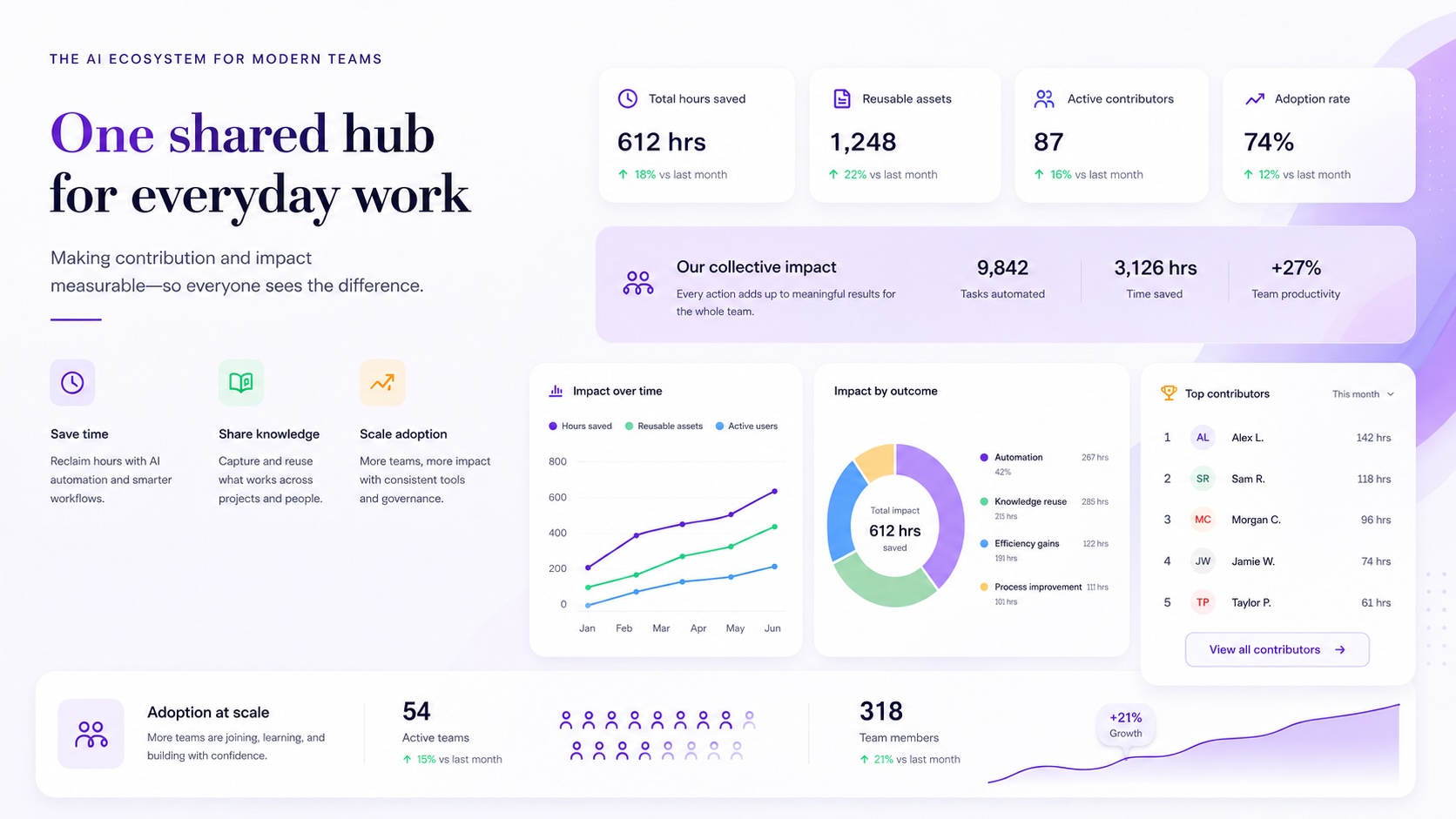
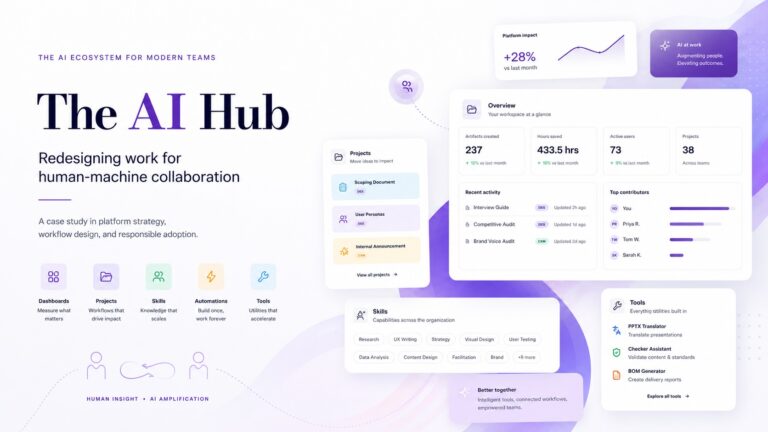
I am defining and designing an Agentic AI Hub for the Design organisation at Proximus in Belgium. The initiative responds to a challenge many organisations now face, AI experiments are multiplying, but learning, governance and value remain fragmented. At the same time, employees are navigating cognitive overload, changing roles and uncertainty about the future of their work.

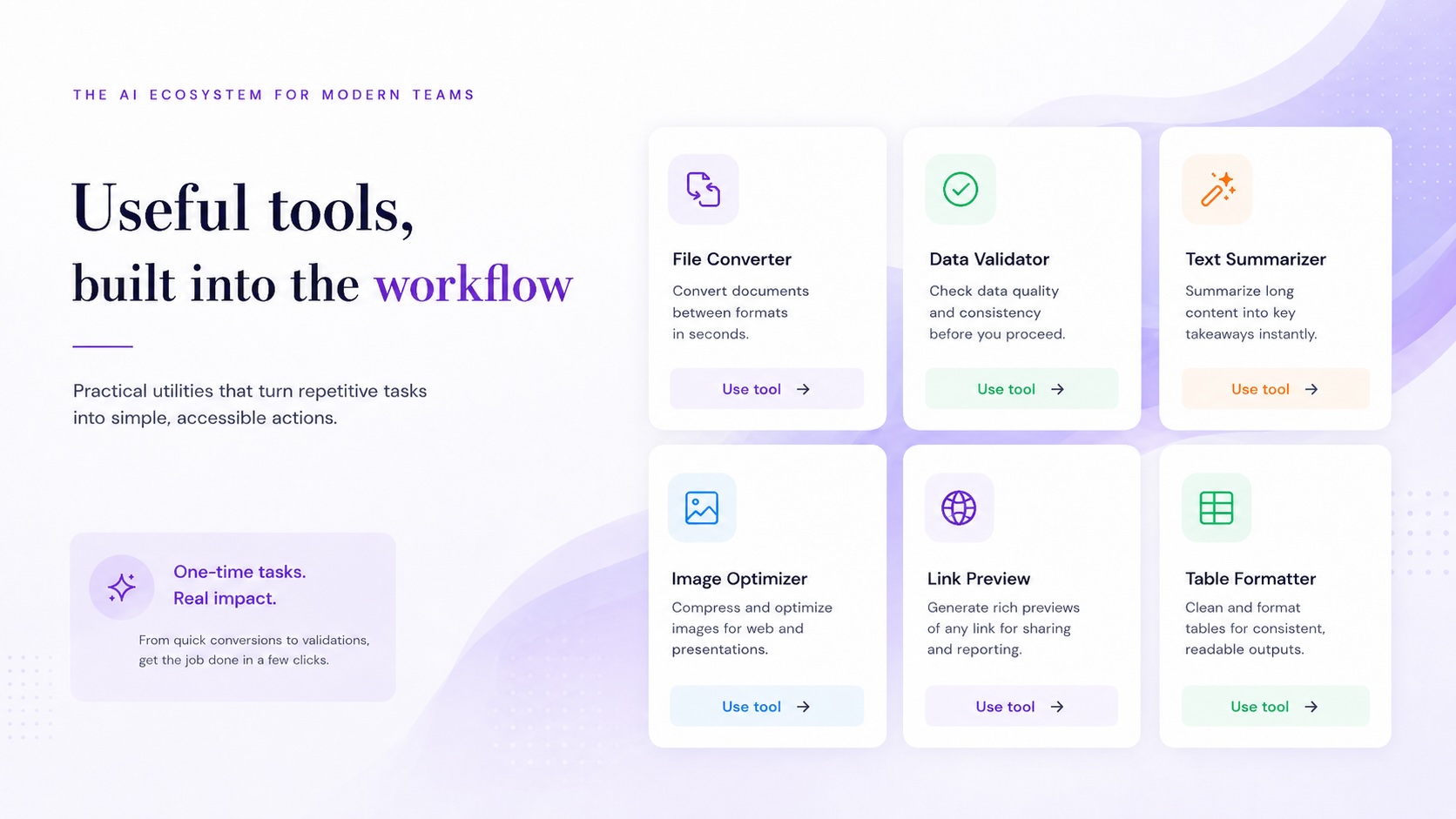
I developed a design-led automation strategy that connects human-centred principles, workforce redesign, reusable agentic capabilities, shared learning and platform governance. The Hub is intended to move the organisation beyond isolated tools and proofs of concept towards a connected system where people can develop AI fluency, redesign workflows, reuse approved capabilities and contribute to intelligence that compounds across the organisation.

Read the full story here →

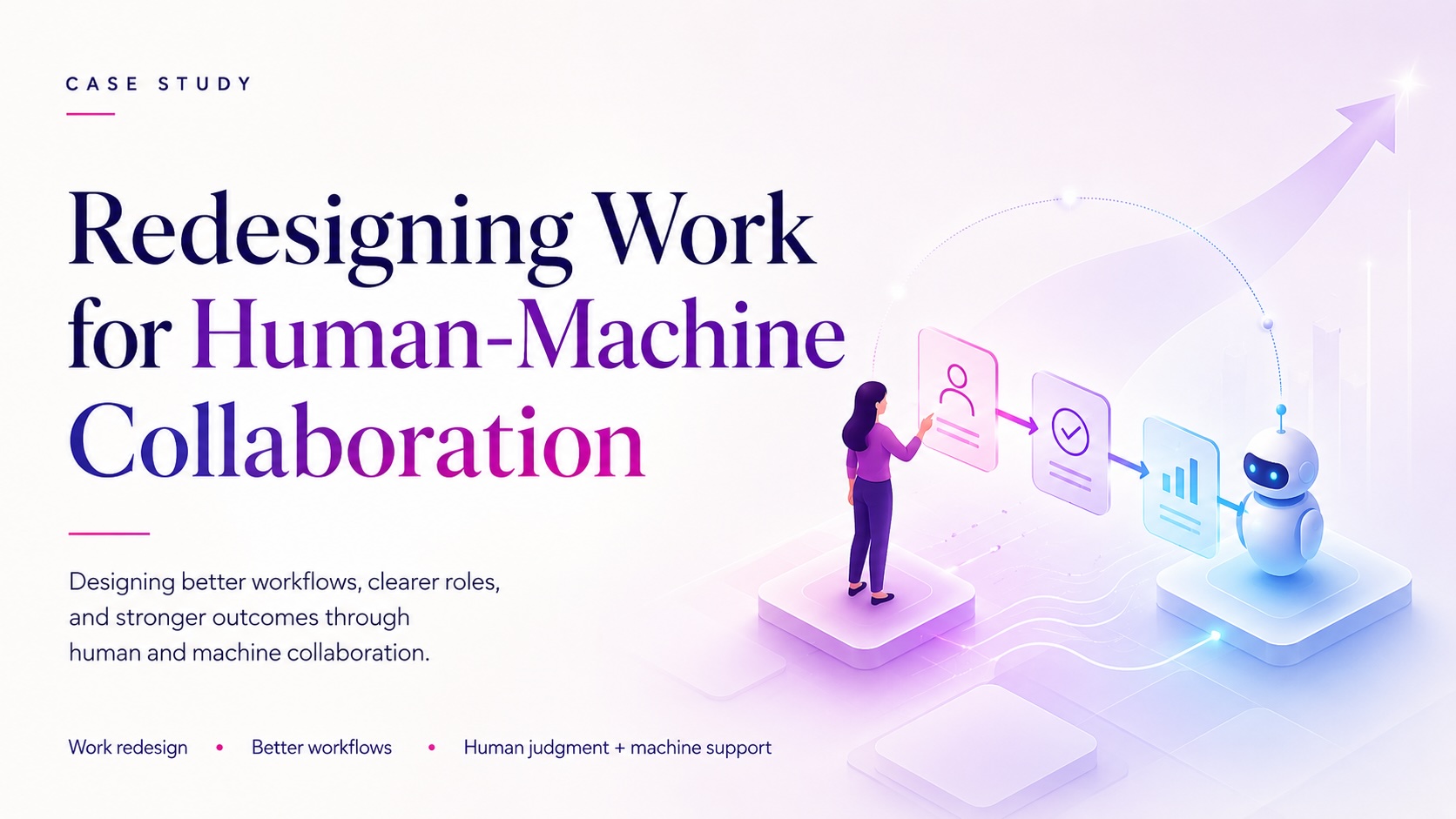
Case Study: Redesigning work for human-machine collaboration, before building AI

Redesigning work for a human-machine collaboration

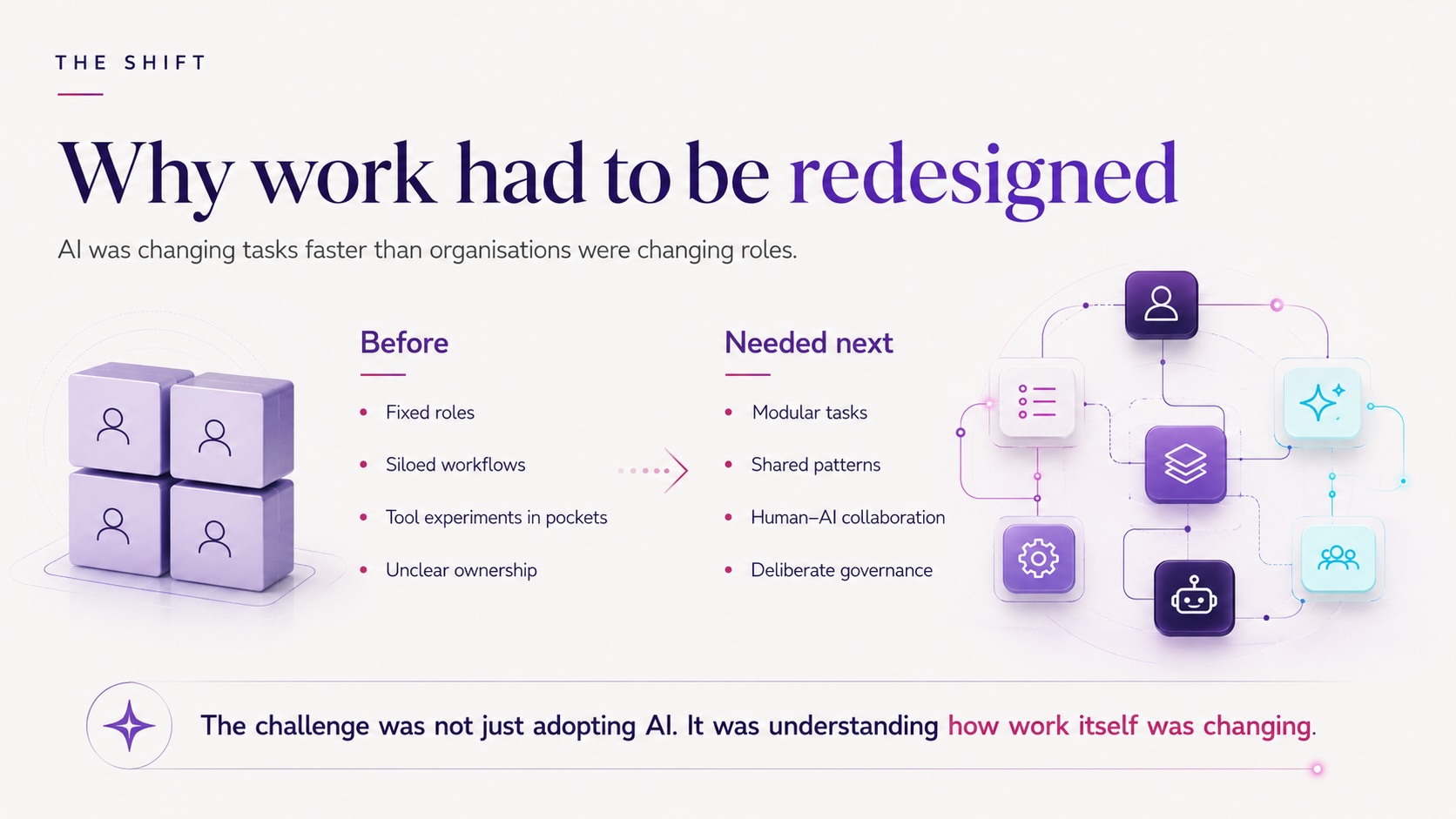
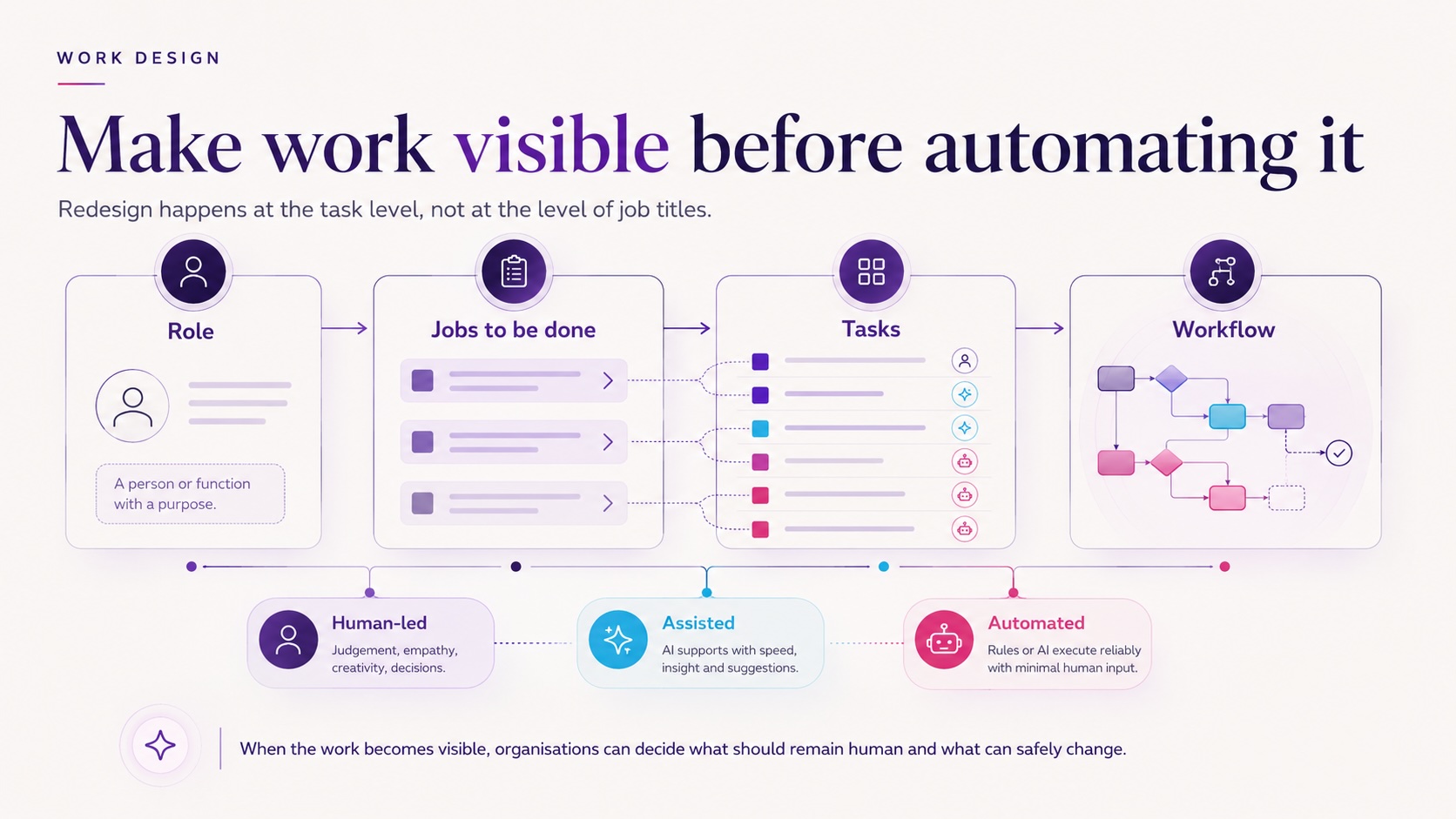
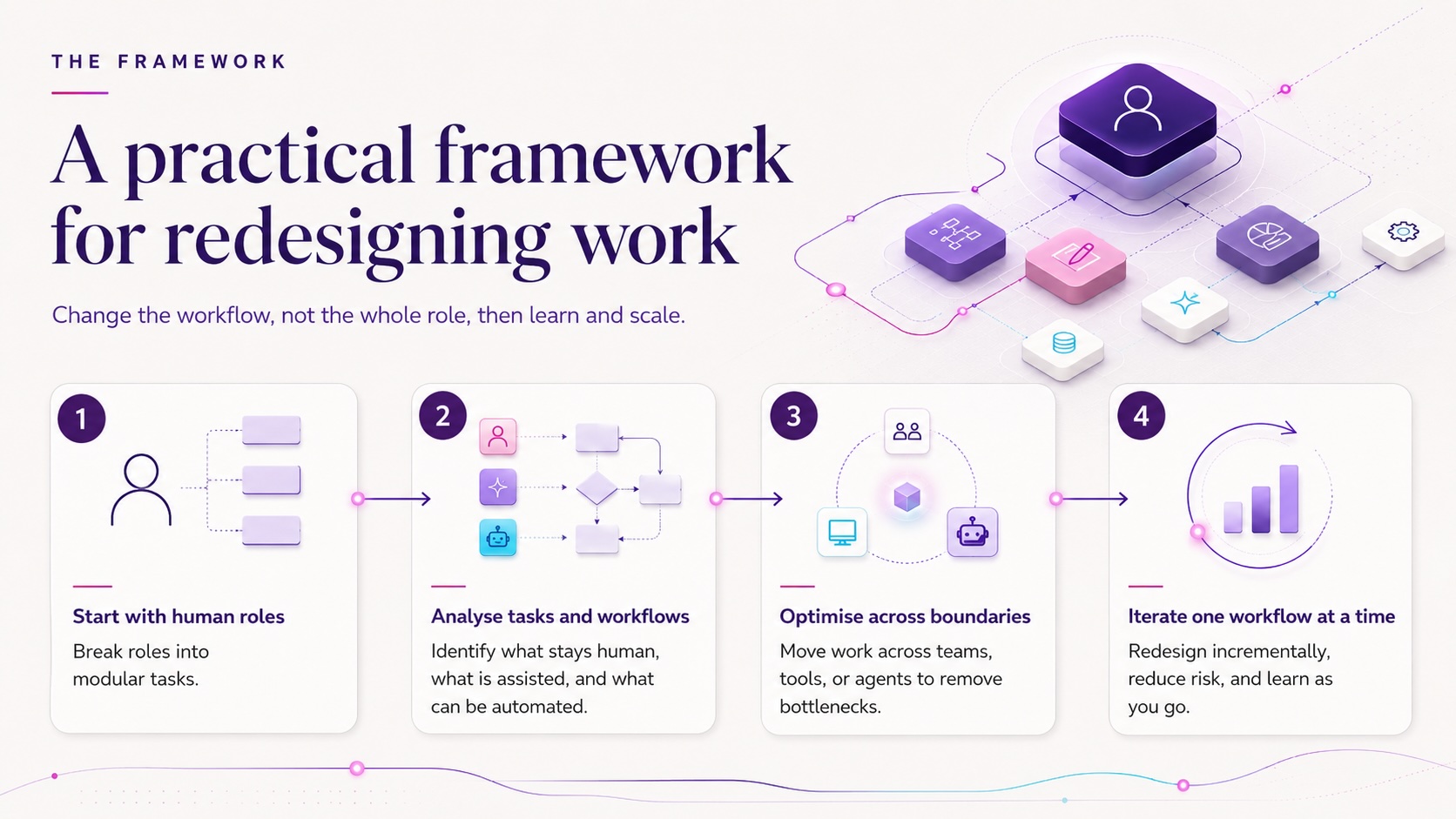
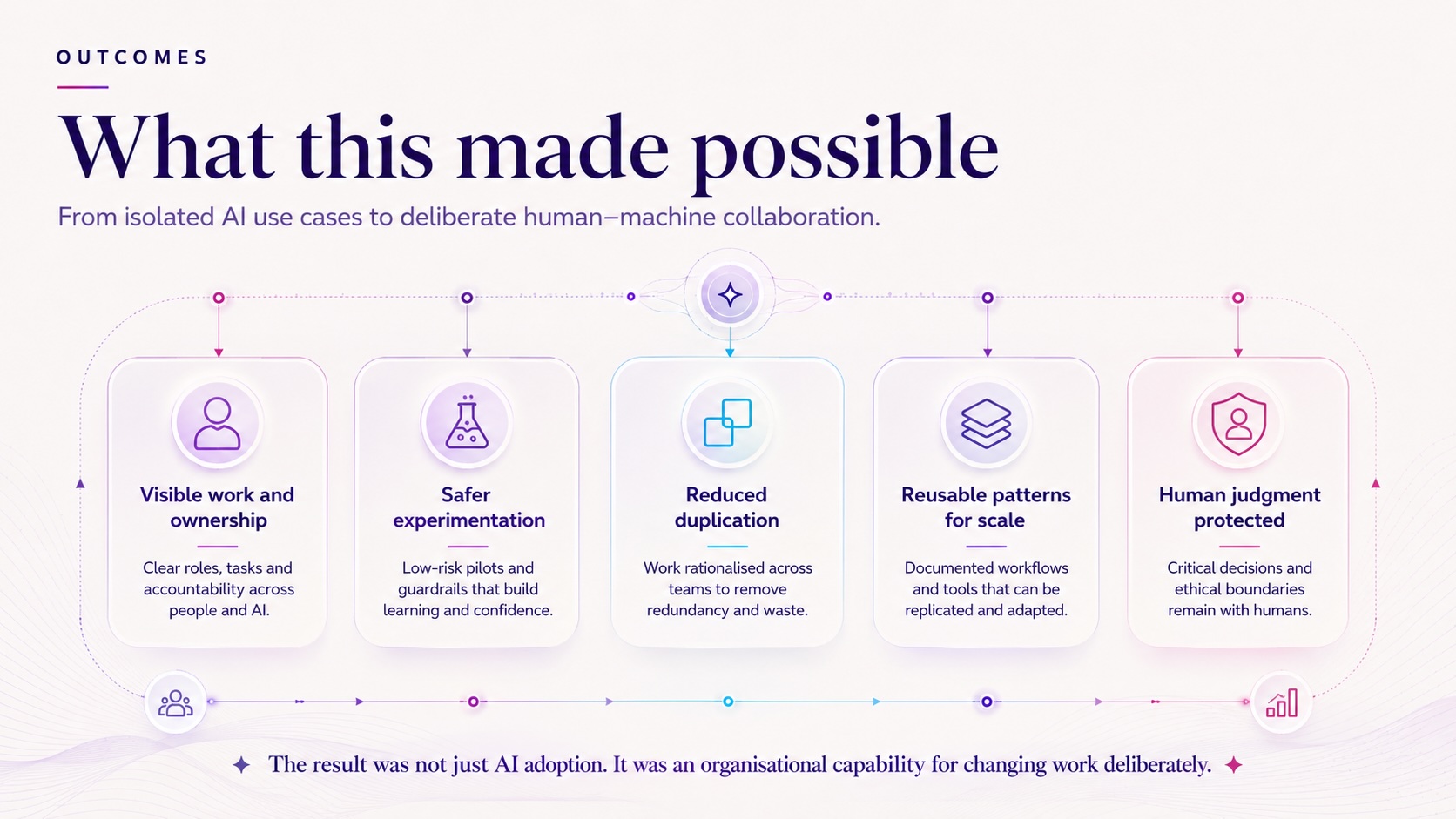
A future-of-work and workforce transformation strategy that decomposed roles into jobs, tasks and workflows, helping a major European enterprise decide what should remain human, become AI-assisted or be automated. The work connected organisational design, HR, responsible AI and practical experimentation to create a safer path from isolated AI use cases to deliberate human and machine collaboration. Before you automate or AI-ify your workflows, you need to redesign your work from human only to human-machine work.

Read the full story here →

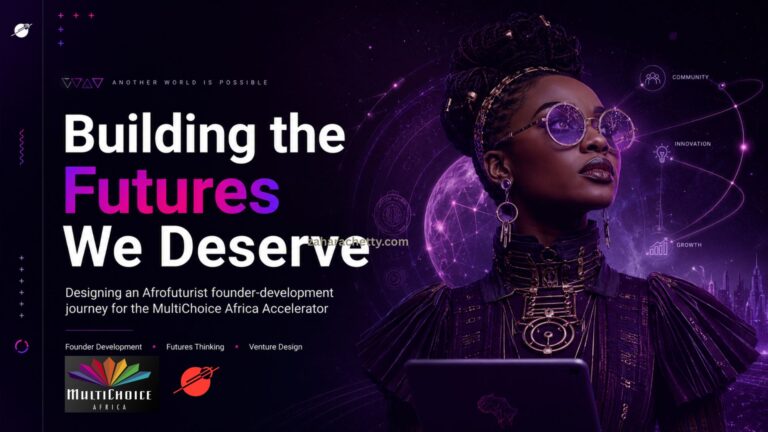
Case Study: Designing an Afrofuturist founder experience

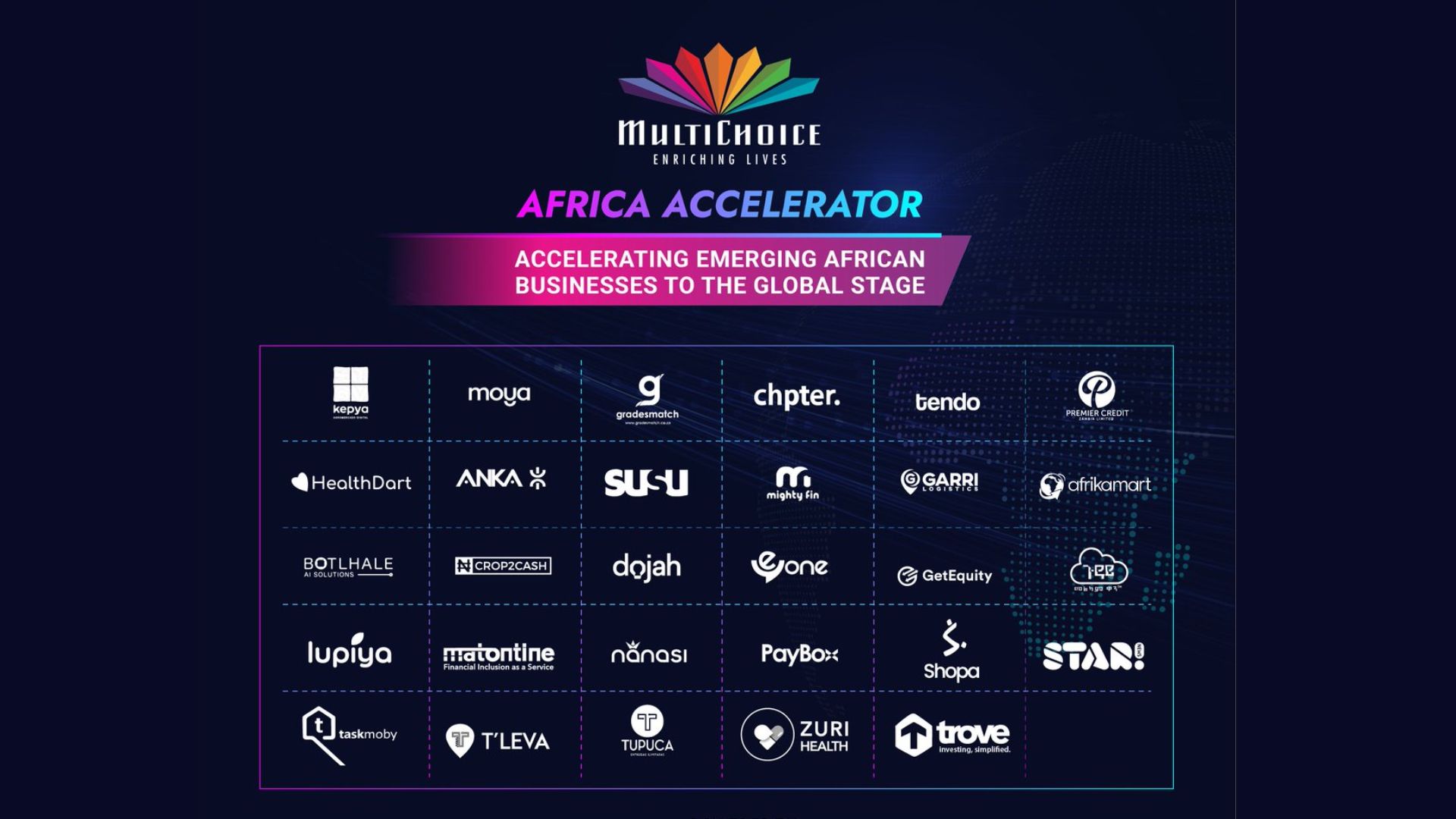
The MultiChoice Africa Accelerator was expanding its support for established technology ventures across the continent, helping founders strengthen their businesses, prepare for investment and connect with international networks. For me, meaningful venture development requires more than refining business models, pitch decks and funding strategies. It also requires founders to examine the assumptions behind what they are building, the people their technologies will affect and the futures their success could help create.

I contributed across the programme journey by interviewing founders during the selection process, helping design the accelerator curriculum, and developing and facilitating its opening module on Afrofuturism and entrepreneurial mindset. The work encouraged founders to move beyond imported narratives of innovation, approach technology through the realities and needs of African communities, and recognise their ventures as practical expressions of the futures they wanted to bring into being.

Read the full story →

Case Study: From co-creation to participatory futures across systems

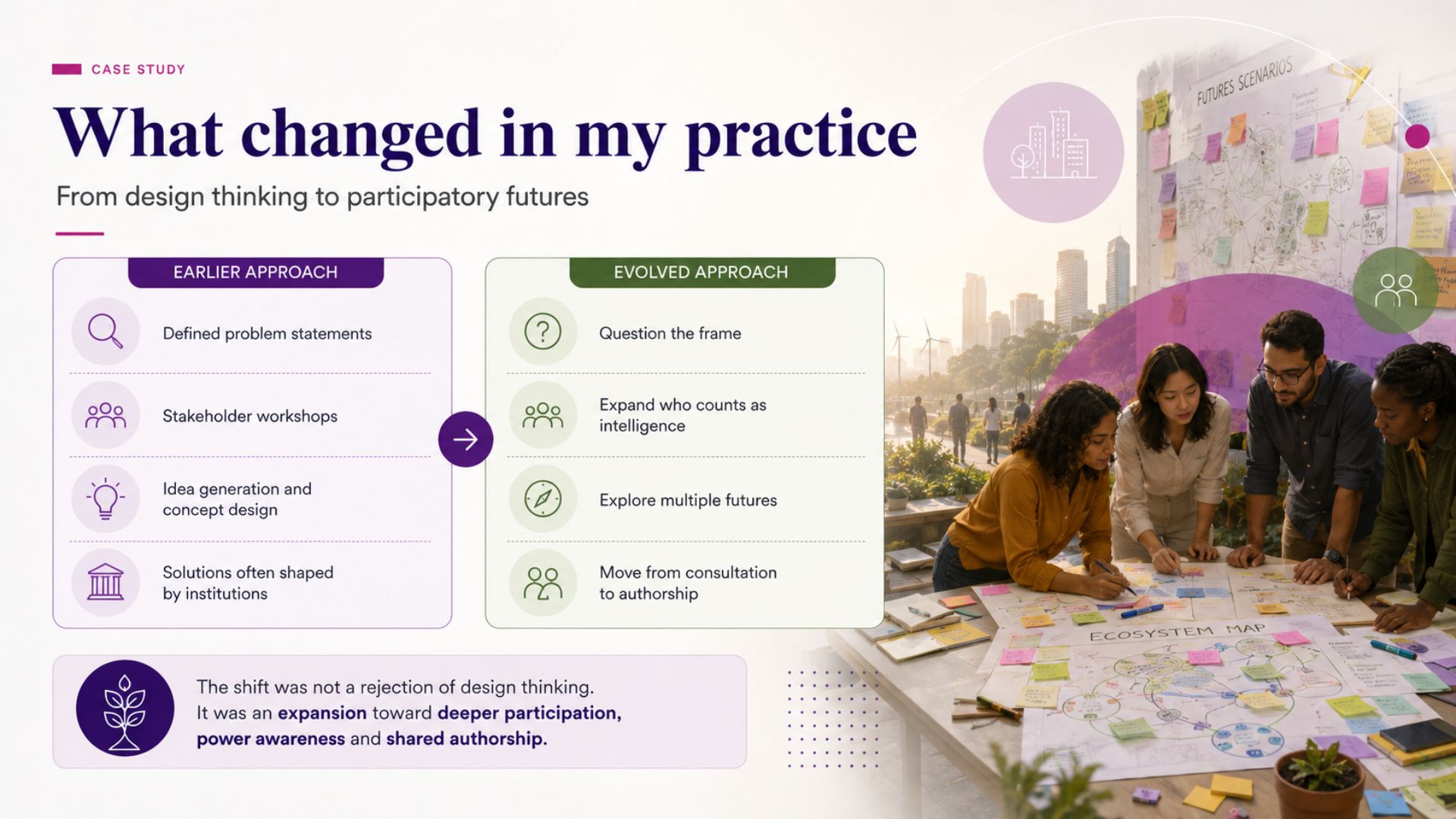
From co-creation to shared authorship

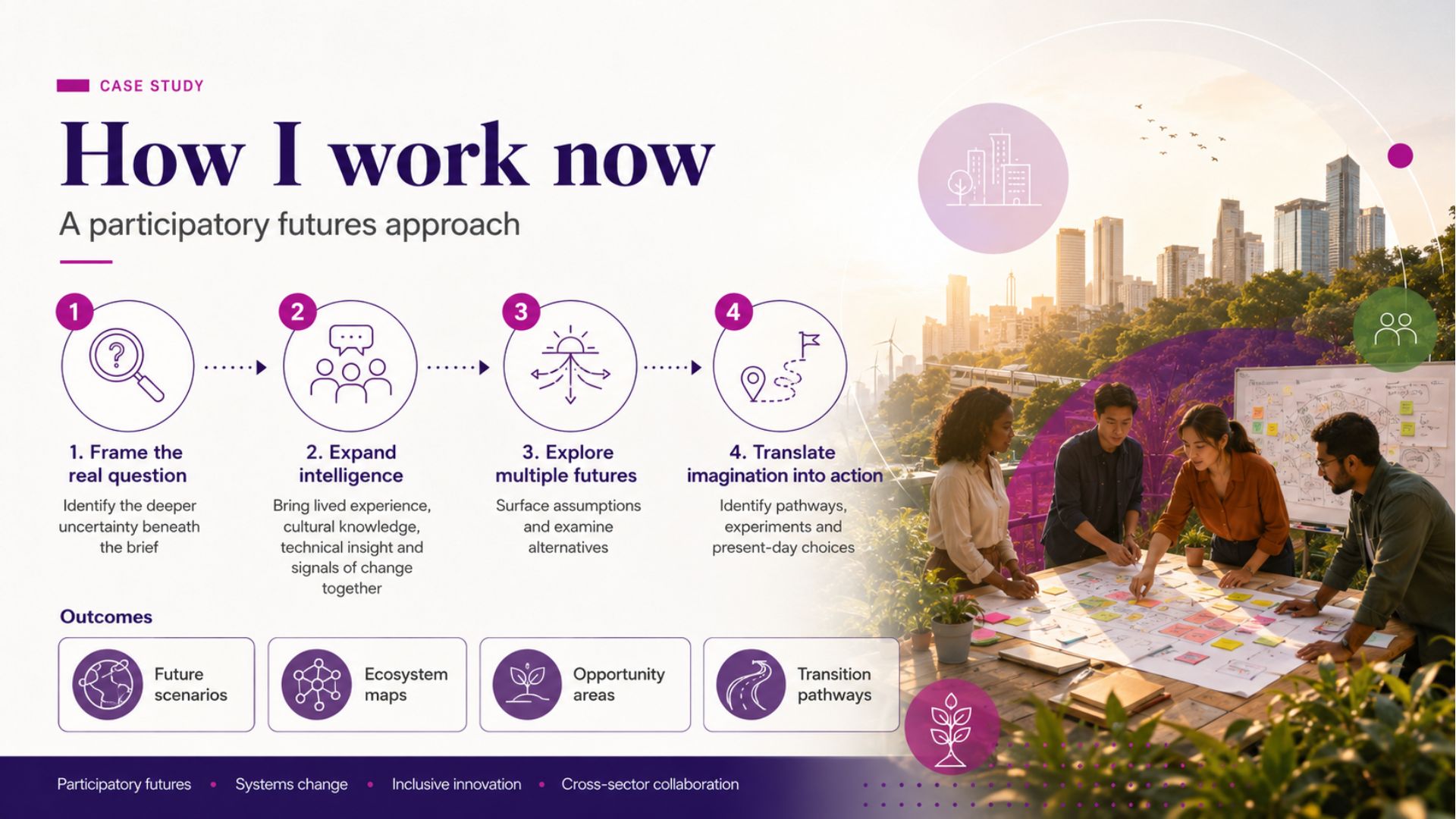
Across international development projects spanning youth employment, green jobs, biodiversity, the future of work and nonprofit transformation, I facilitated cross-sector processes that brought institutions together to tackle challenges no single organisation could solve alone. The work showed me both the power and the limits of conventional design thinking, and fundamentally changed how I approach every engagement since. Today, whether I am working on AI transformation inside an enterprise, designing a futures programme for emerging founders or building Bloomforge Lab, the same question sits at the centre, “Who gets to imagine what comes next, and how do we create the conditions for them to become genuine authors of it?”

Read the full story here →

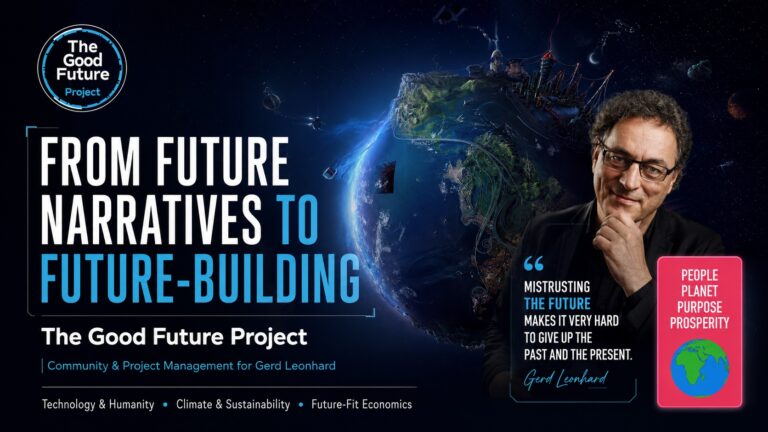
Case Study: The Good Future Project, from Future narratives to Future-building

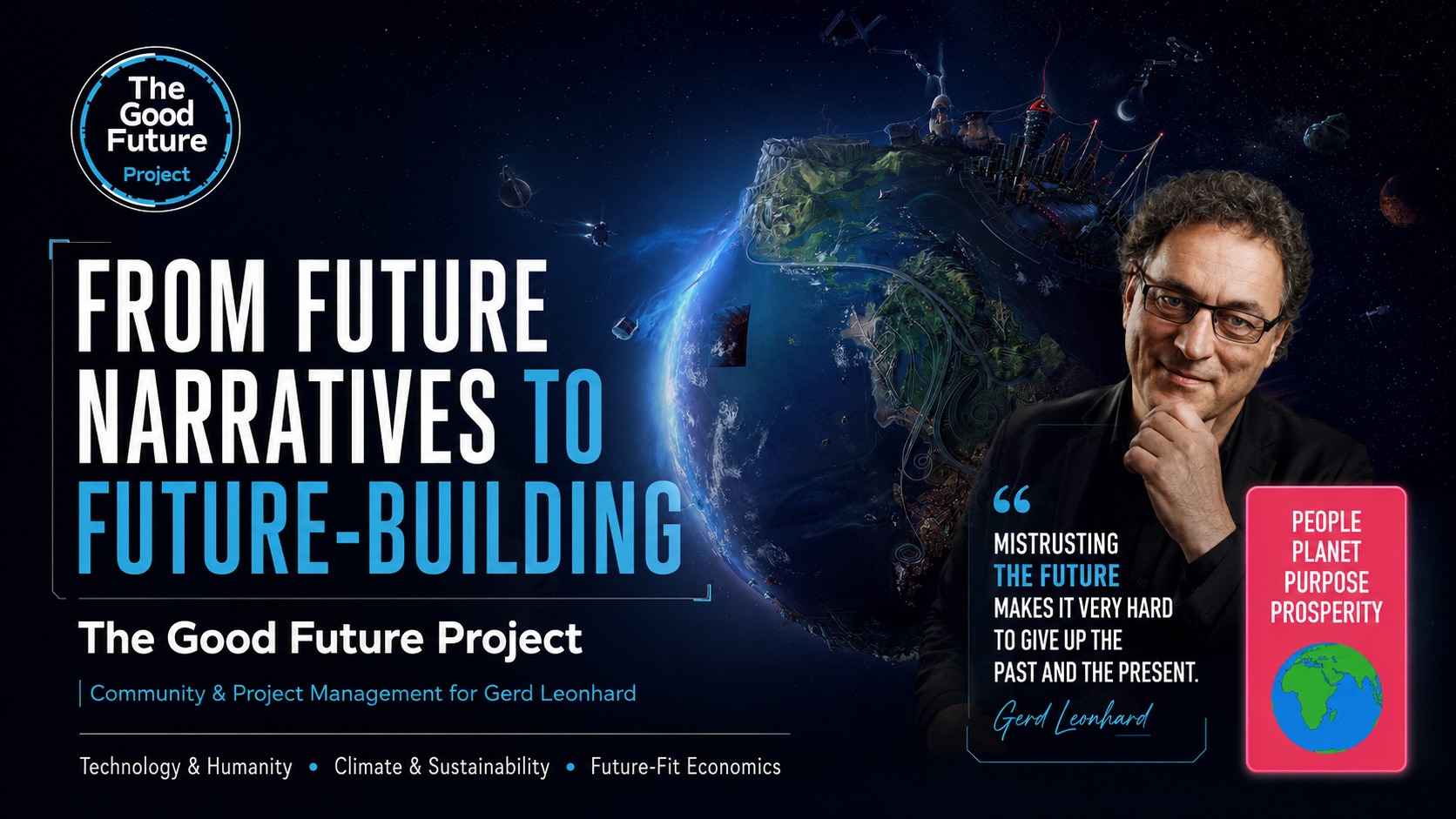
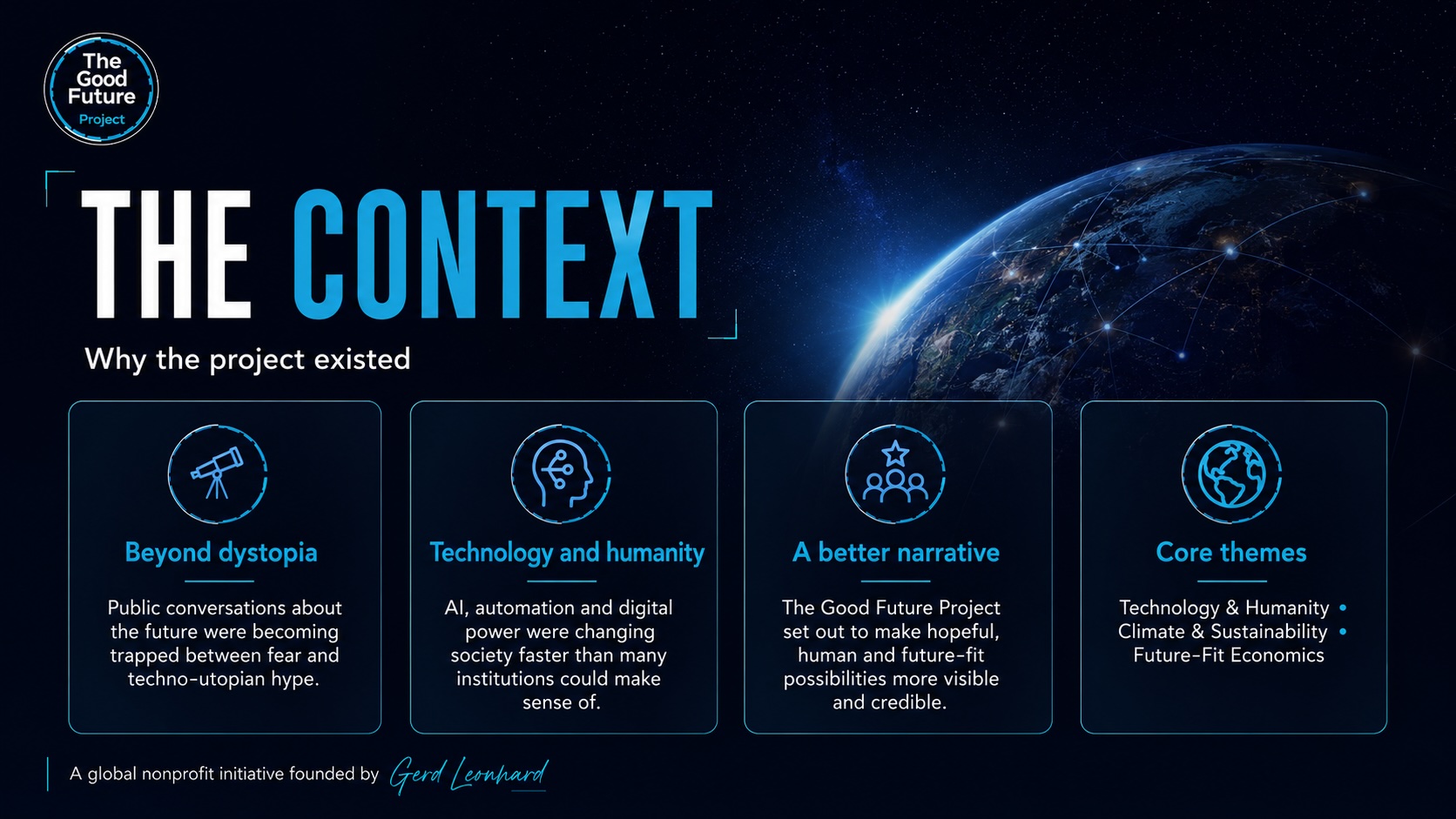
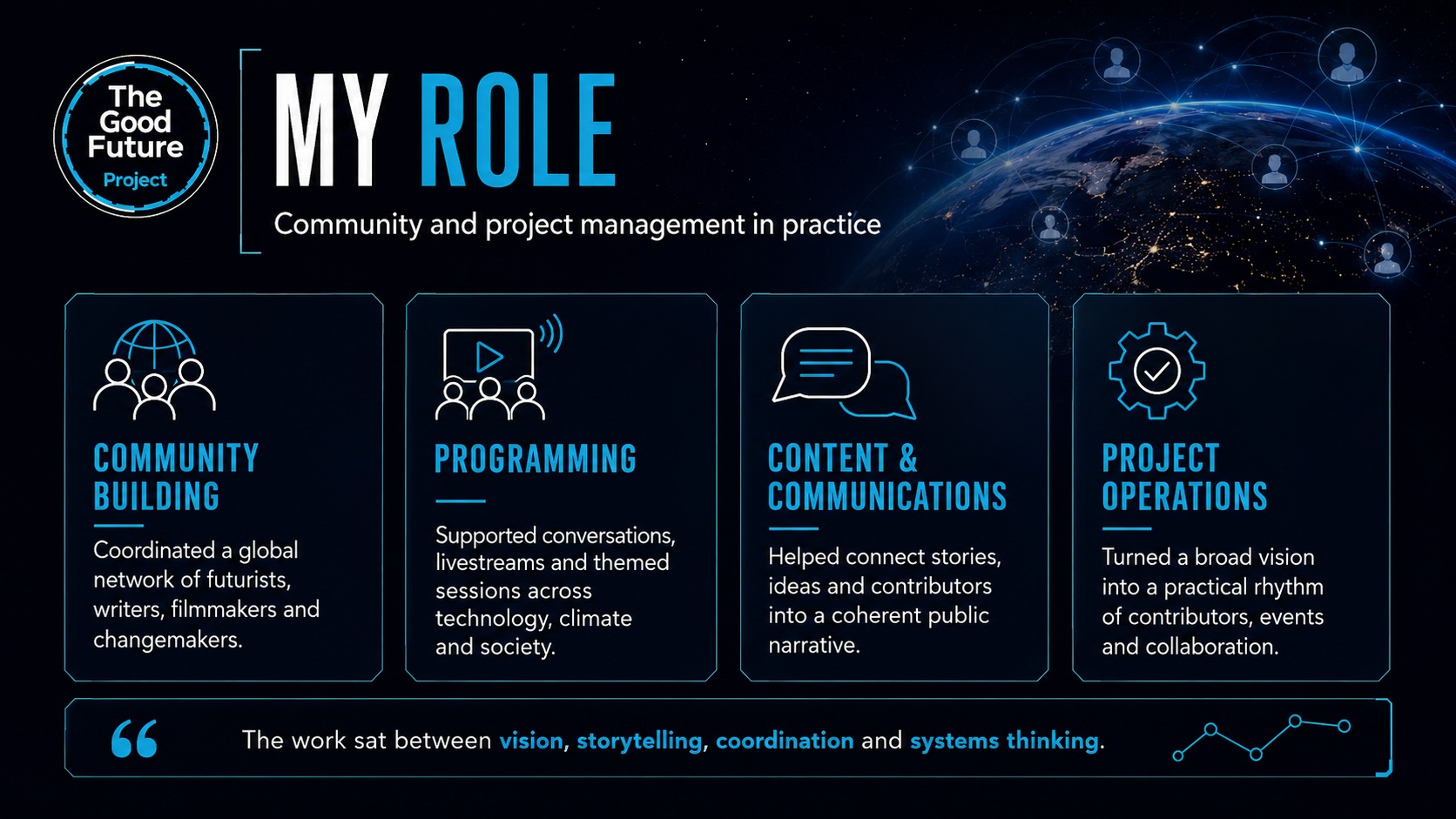
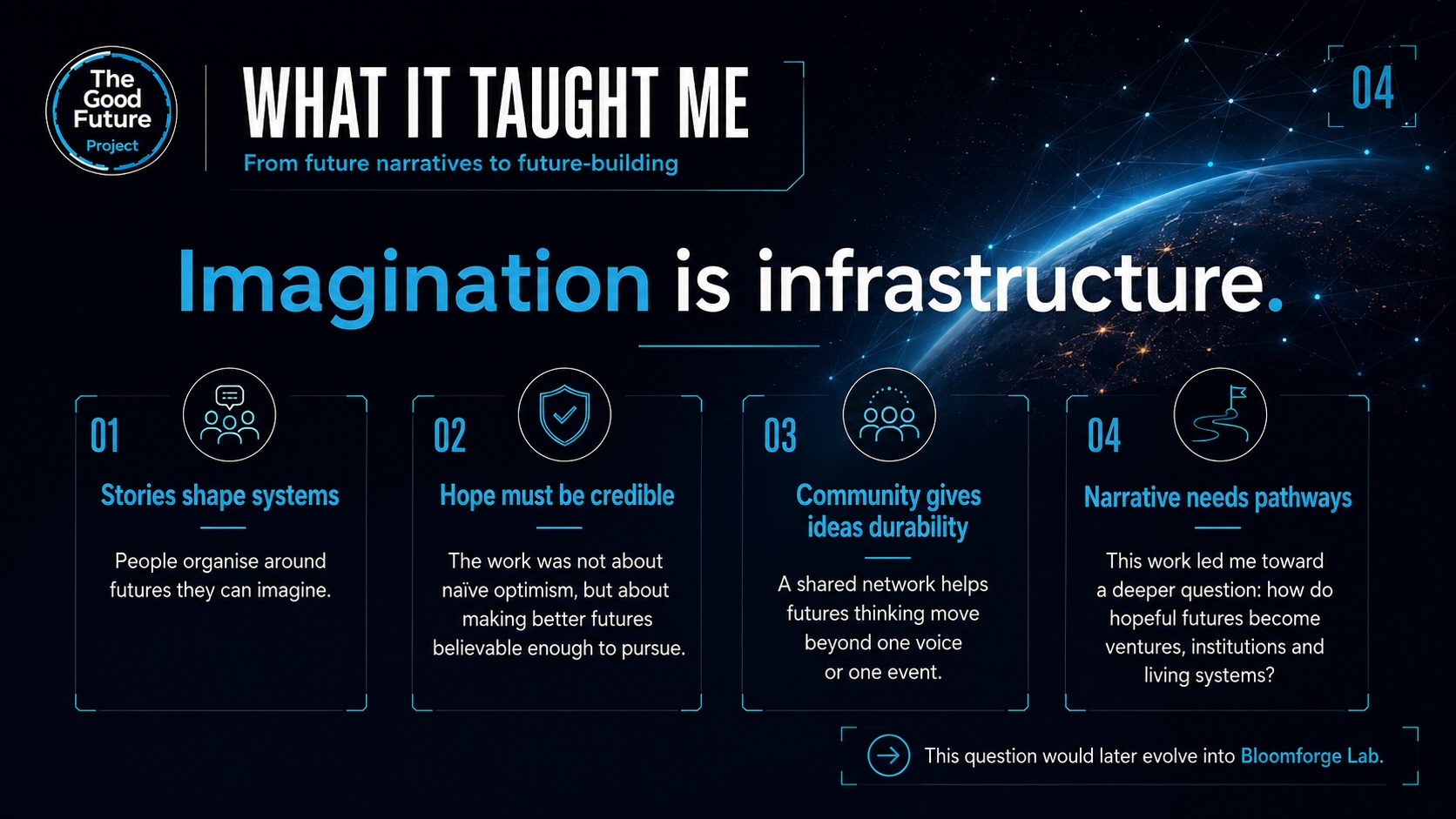
As Community and Project Manager for Gerd Leonhard’s Good Future Project, I helped develop a global network of futurists, writers, filmmakers and changemakers exploring technology and humanity, climate action and future-fit economics. I coordinated contributors, community programming, digital content and public conversations designed to challenge dystopian narratives and make more hopeful futures visible. The work taught me that imagination and community are essential infrastructure for change, but also raised the question that now shapes Bloomforge Lab, “How do we turn better stories about the future into ventures, institutions and living systems?”

Read the full story here →

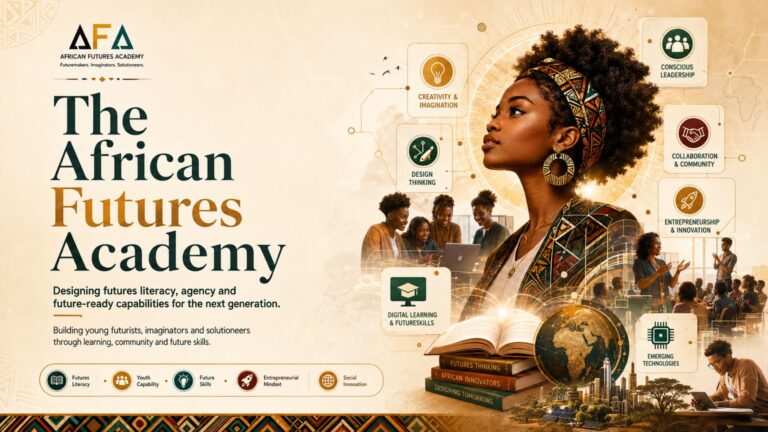
Case Study: The African Futures Academy (AFA)

From futures literacy to a founder-support system for Africa’s new economy

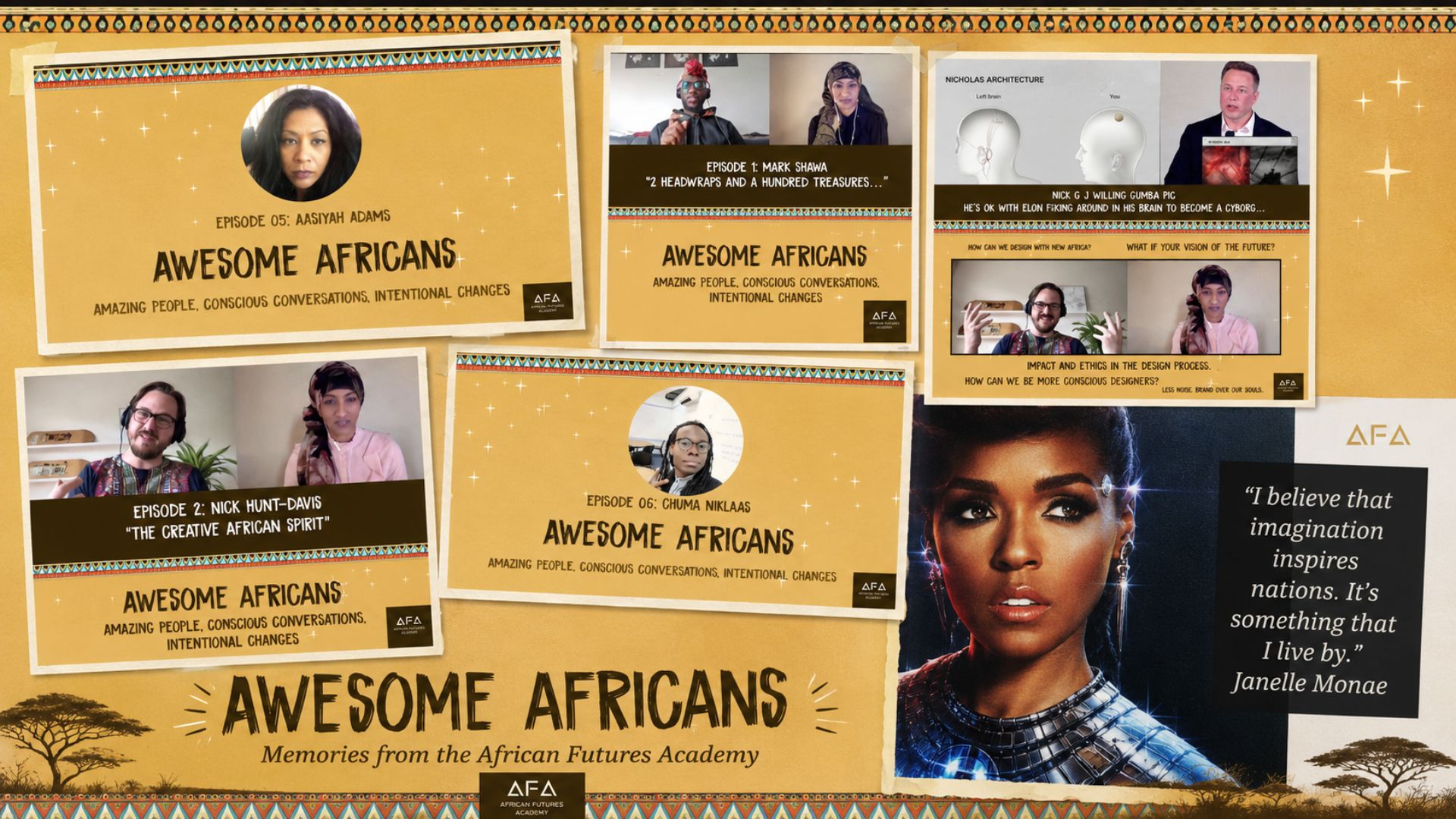
The African Futures Academy began as an experiment in helping young Africans see themselves as authors of the future, not simply recipients of futures designed elsewhere. Through learning experiences, public conversations and the Awesome Africans series, I explored how futures thinking, identity, ethical imagination and African role models could strengthen agency and expand what young people believed was possible.

The work revealed a deeper challenge. imagination and future literacy are essential, but they are not enough. Emerging founders also need practical support to test ideas, build viable ventures, access markets and capital, and sustain themselves through the realities of building. The Academy is now informing the design of a more joined-up support system for founders creating Africa’s next economy.

Read the full AFA story →

Case Study: From futures research to values based venture creation

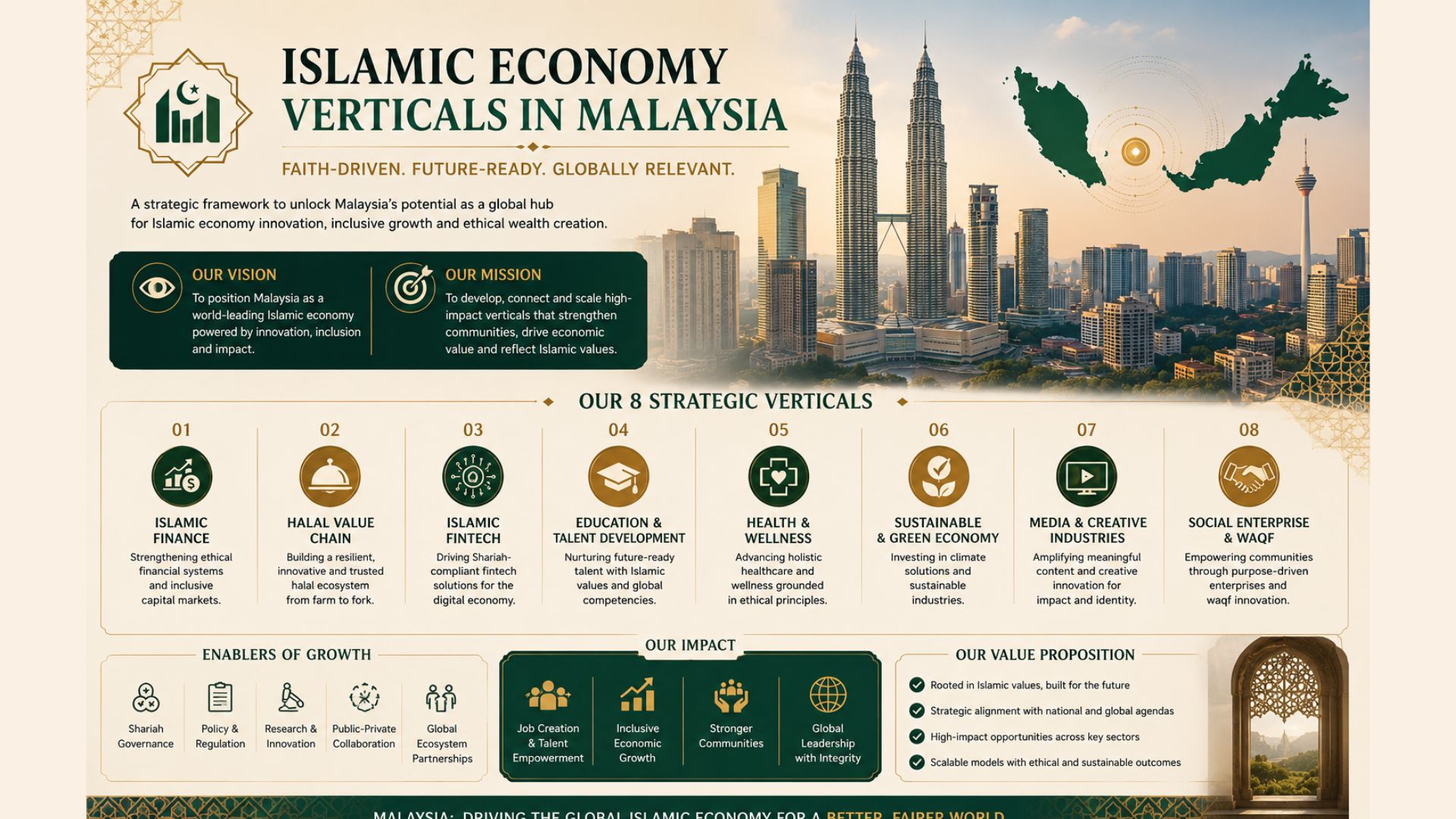
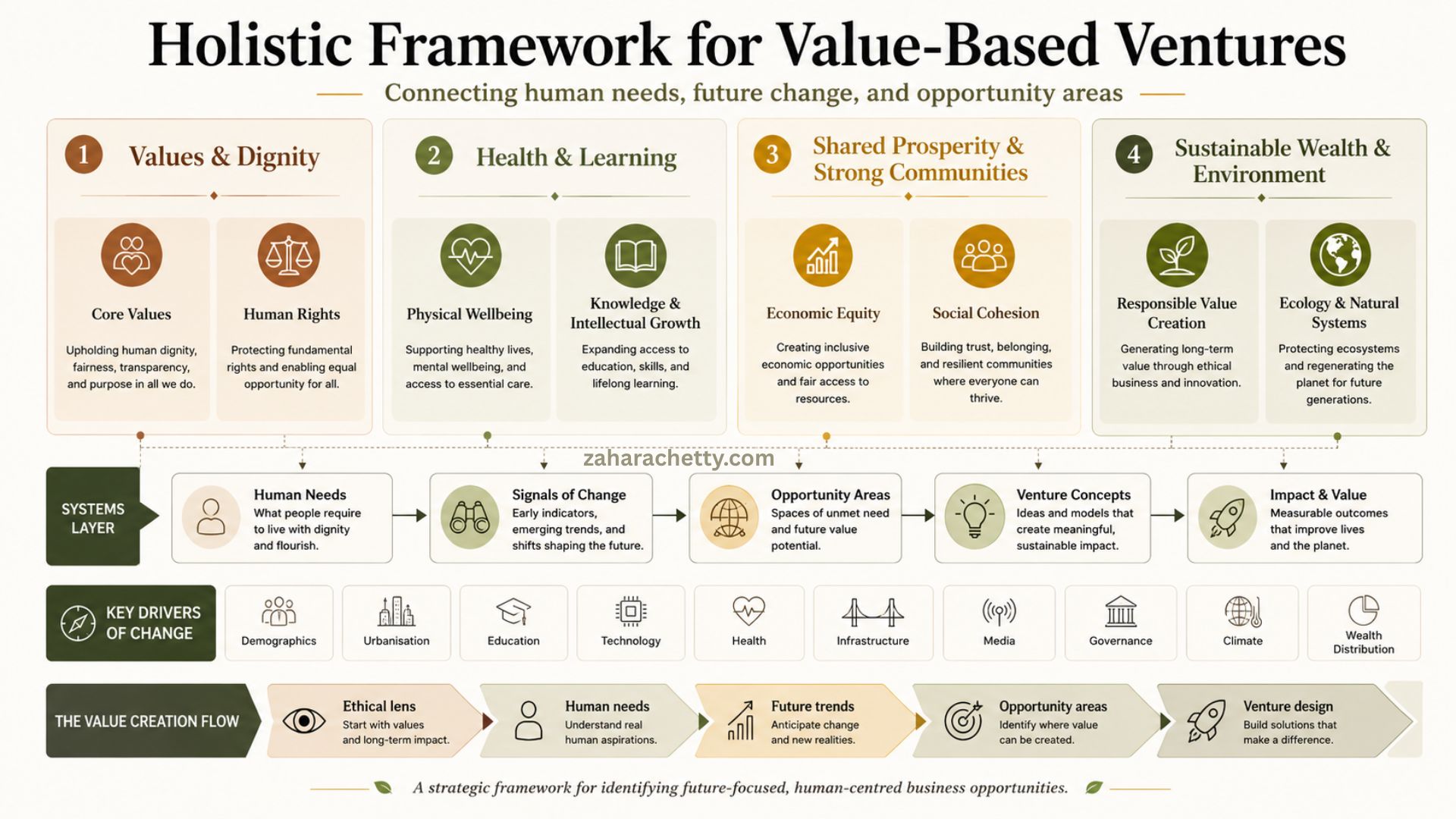
A study on the Islamic Economy and opportunities

I was asked to help research and design innovation and venture opportunities  in the Islamic Economy for Andalus Ventures in Malaysia. The global Islamic economy is commonly described through a set of established commercial verticals, Islamic finance, halal food, travel, modest fashion, media, pharmaceuticals and cosmetics. These categories reveal the scale of existing markets. They do not necessarily reveal the deeper needs, emerging challenges and unrealised possibilities that will shape the future.

In 2020, I began this work with a different question, What might the Islamic economy become if it were designed around human flourishing rather than defined primarily through categories of consumption? The project combined futures research, systems thinking, human-centred inquiry and innovation design to identify future areas of need, frame opportunity territories and create a practical architecture through which new ventures could be developed.

Read the full story here →

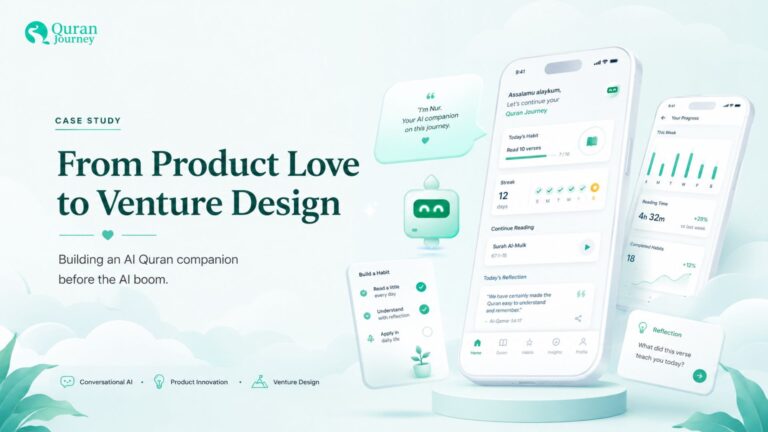
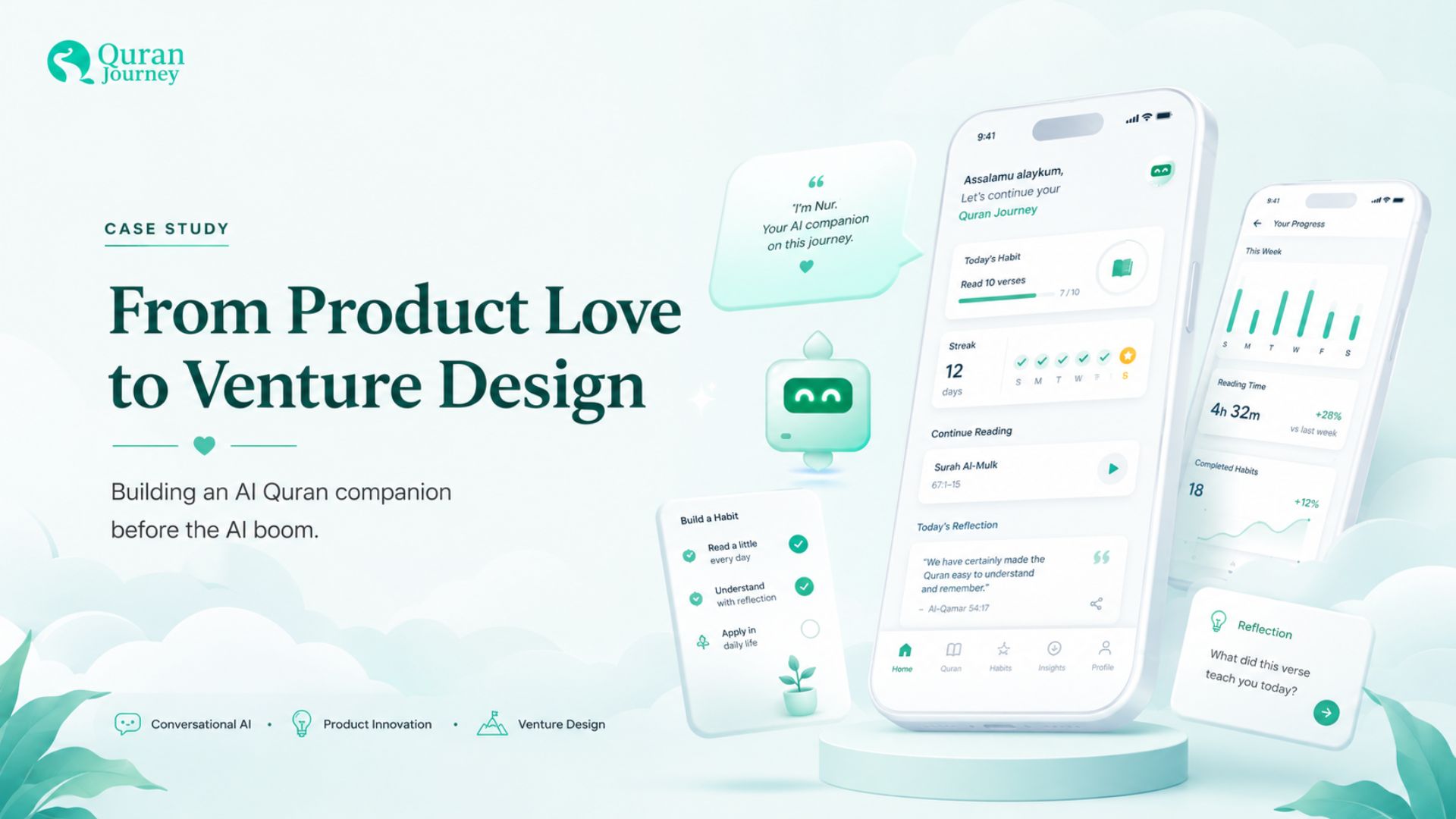
Case Study: Building an AI companion before chatbots were a thing

In 2015, I joined a values-led organisation in Saudi Arabia as its first woman employee, working remotely across cultures and disciplines. My role evolved from UX research into innovation and R&D, where I collaborated with a global team on emerging technologies including VR, AR and digital learning.

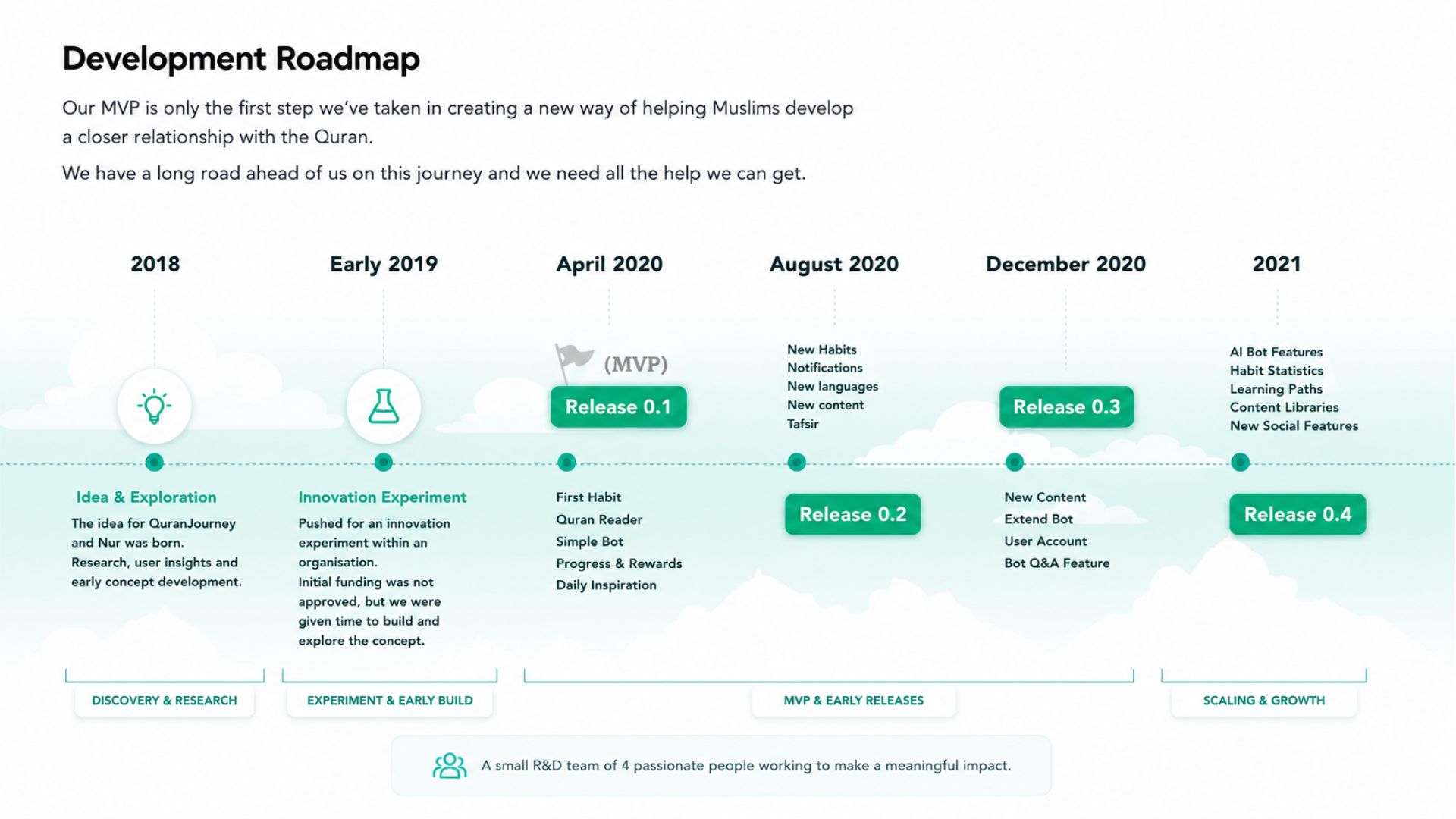
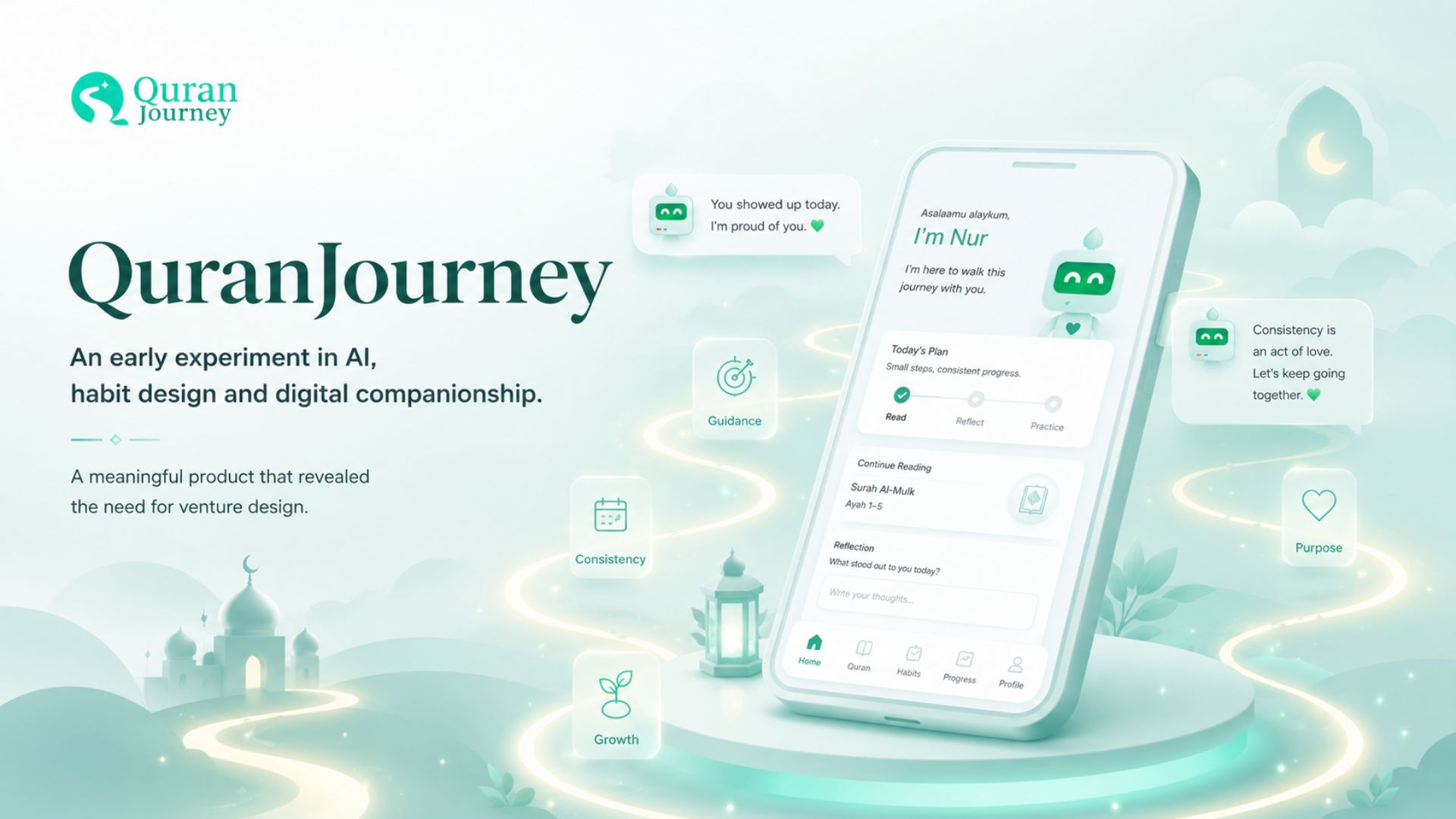
In 2018, we conceived QuranJourney and later developed Nur, an early AI-supported Quran companion, well before gen AI or chatbots were a thing, through a four-person R&D experiment. People valued the product, but we had not created a sustainable business and operating model around it. The experience became a turning point in my practice, pushing me into venture and business design because meaningful products need values, viability, governance and the wider systems required to keep their impact alive. 

Read the full story here →

Case Study: Making UX design smarter

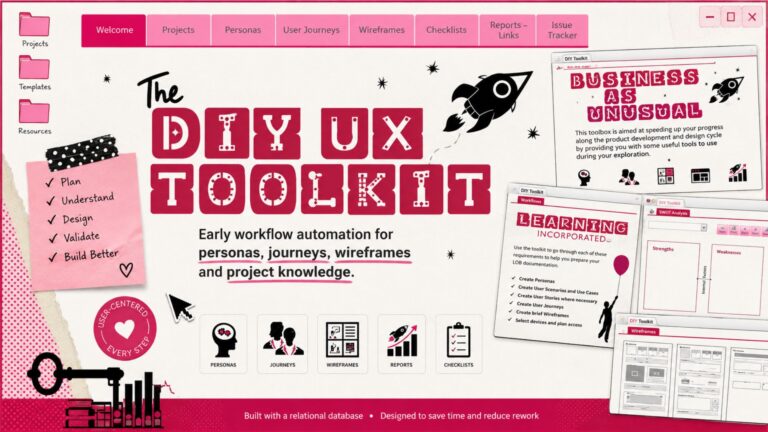
In the beginning of the 2010s, when UX was a new thing for us, designers were producing valuable work around research, personas, journey maps, user stories, but those outputs were disconnected from each other and difficult to carry forward. As projects moved between phases, between teams, between handoffs, the user focus quietly disappeared. The user focus could disappear along the way.

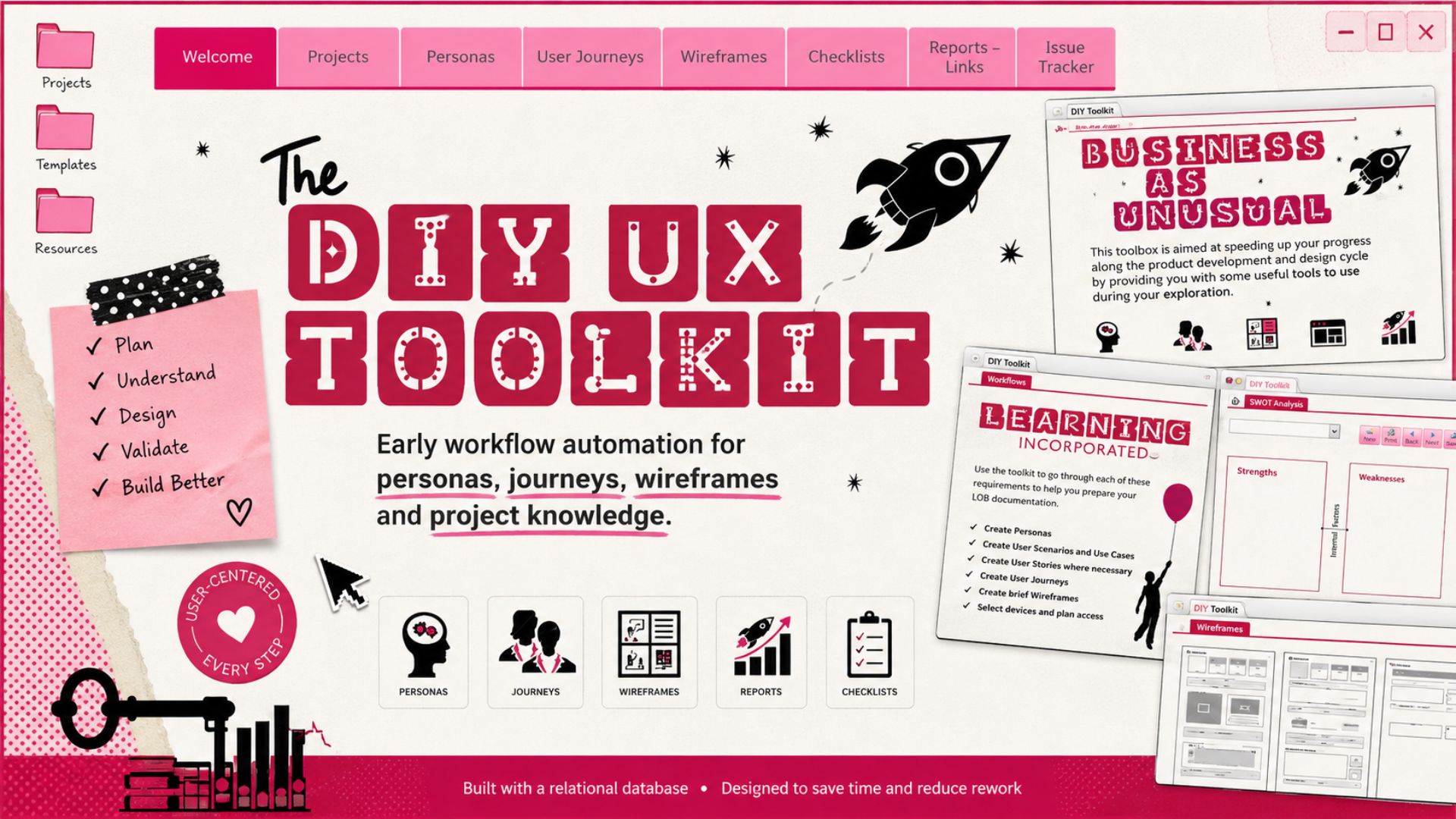
There was no AI, so using the tools available at the time, I began designing a relational database and digital UX toolkit at Pearson Education, that could connect these artefacts into one working system. The idea was to give teams a structured starting point for projects and make it easier to create, track, update, share and reuse key design deliverables. Rather than treating personas, journeys and user stories as static documents, the system would link them together and give them an easy way to fully understand the design journey and decisions. Maybe this was 10 years too early, for everyone to understand, but it seemed like a good idea at the time.

Read the full story here →
Case Study: Automating to make room for what really matters

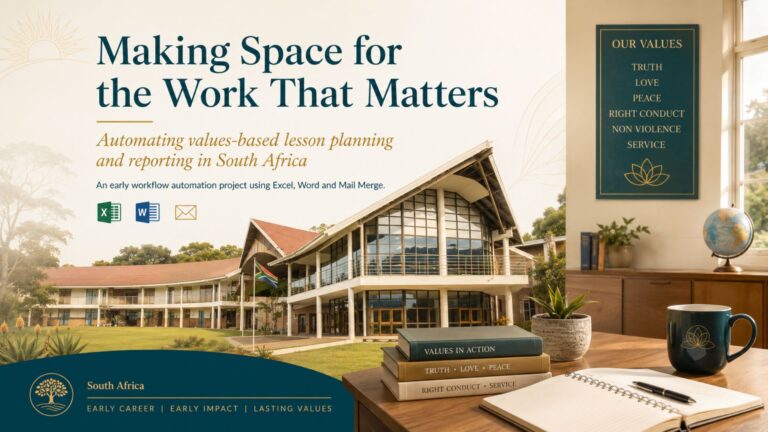
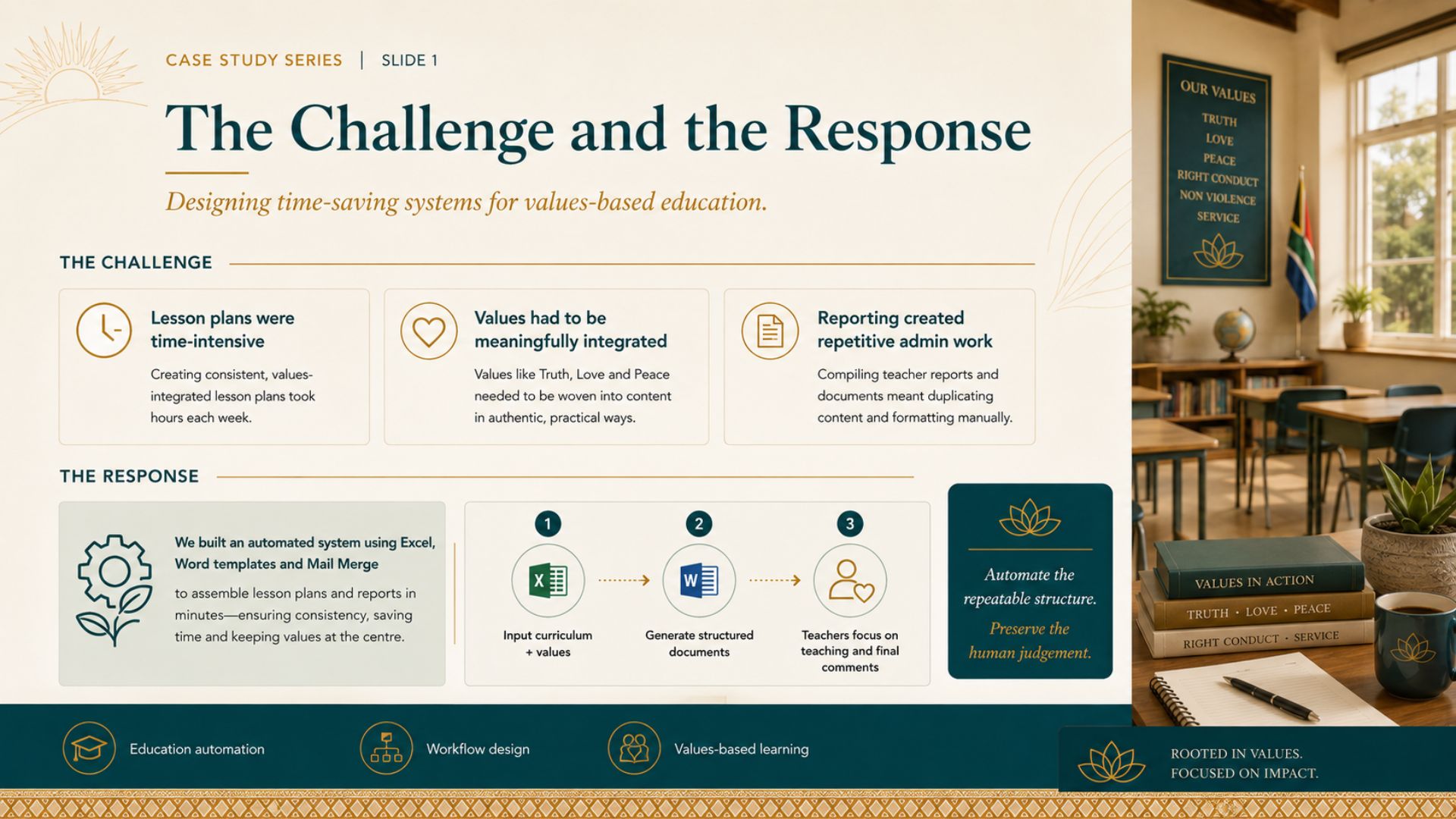
My earliest automation work began in a classroom in South Africa in the early 2000s. I was teaching at a Values-education school, where education was grounded in both the national curriculum and an explicit commitment to human values. Every lesson had several extra layers to it. It needed to meet formal curriculum requirements, it had to open with a meditation or reflective activity. Values education had to be meaningfully woven into the subject matter, not added as a statement at the end, but genuinely integrated into how the content was taught. It also needed clear learning objectives, activities, resources and assessment criteria. All this meant extra work for teachers, and of course me.

Much of the work was searching, copying, formatting and checking, ensuring the right values, the right curriculum references and the right lesson components were all present and correctly structured. Important work, but also largely mechanical and time-consuming. I began asking a question that would follow me for the next two decades, “What can the system carry, so that people have more time for the work only they can do?”

Read the full story here →
 

Copyright @ Zahara Chetty PTY LTD 2026