Case Study: From product love to venture design
Building an AI companion before chatbots were a thing

Walking into unknown territory
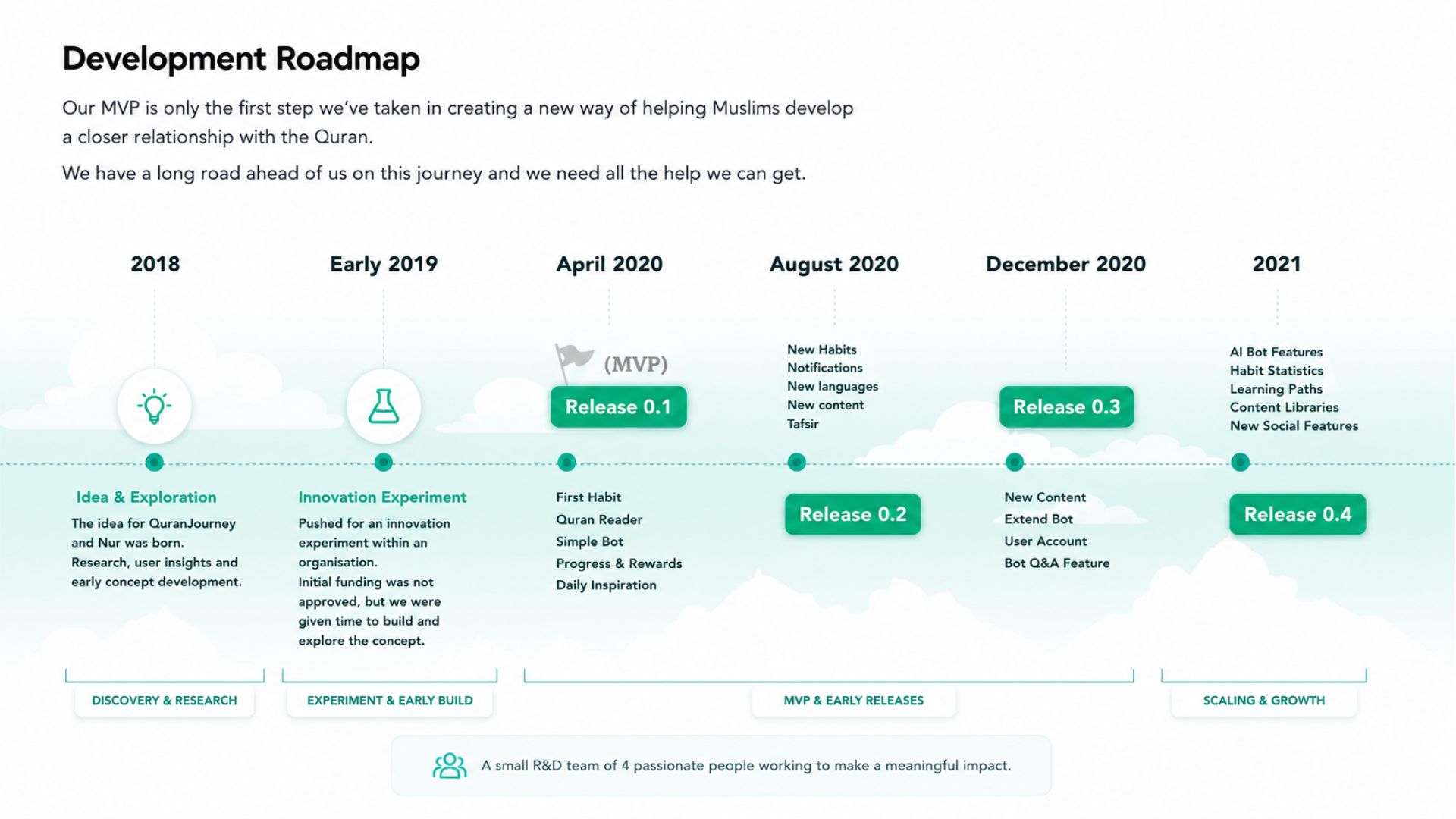
In 2018, a small group of us inside a values-based NGO began asking a question that would take another five years to become mainstream: could conversational technology help people develop a more meaningful, more consistent relationship with something they cared deeply about. without replacing the human and community structures that made that relationship real?
This was before AI assistants were part of everyday life, before “AI companion” was a product category and before anyone was writing think-pieces about the ethics of digital intimacy.
We were building it anyway.
The design problem no one had named yet
Most technology projects begin with what the technology can do and work backwards toward a use case. We started from the opposite direction.
The organisation’s mission shaped the questions. We weren’t asking which features to build, we were asking what kind of relationship this product should create. Where should the assistant stop? What requires human or scholarly guidance? How do you design for trust, cultural sensitivity and spiritual meaning without making something that feels intrusive or reductive?
These are questions the AI industry is still working out. We were asking them in 2018, inside a four-person R&D team, with no significant funding and no established model to follow.
That constraint turned out to be clarifying. When you can’t default to scale or speed, you have to default to intention.
What we built
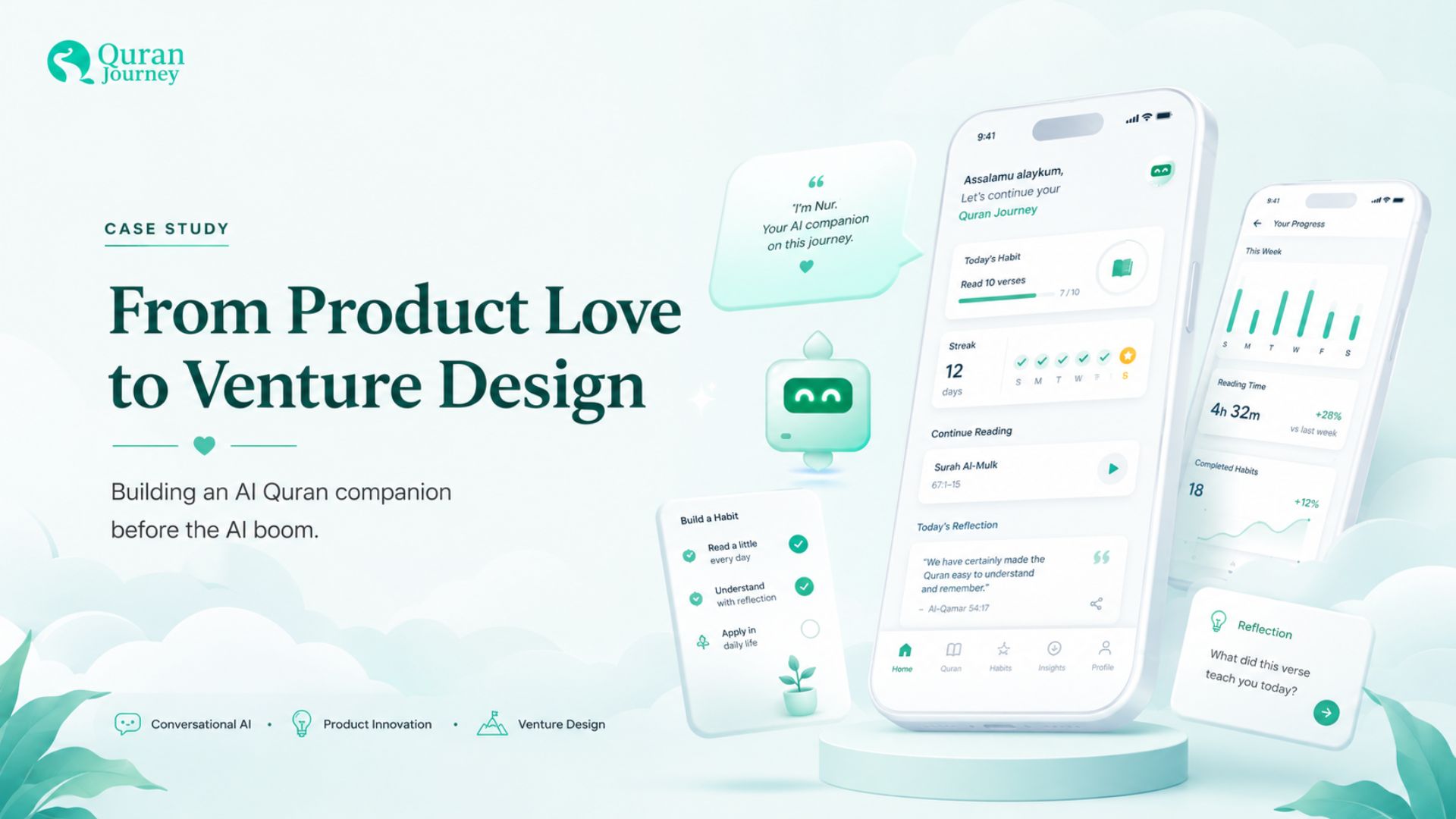
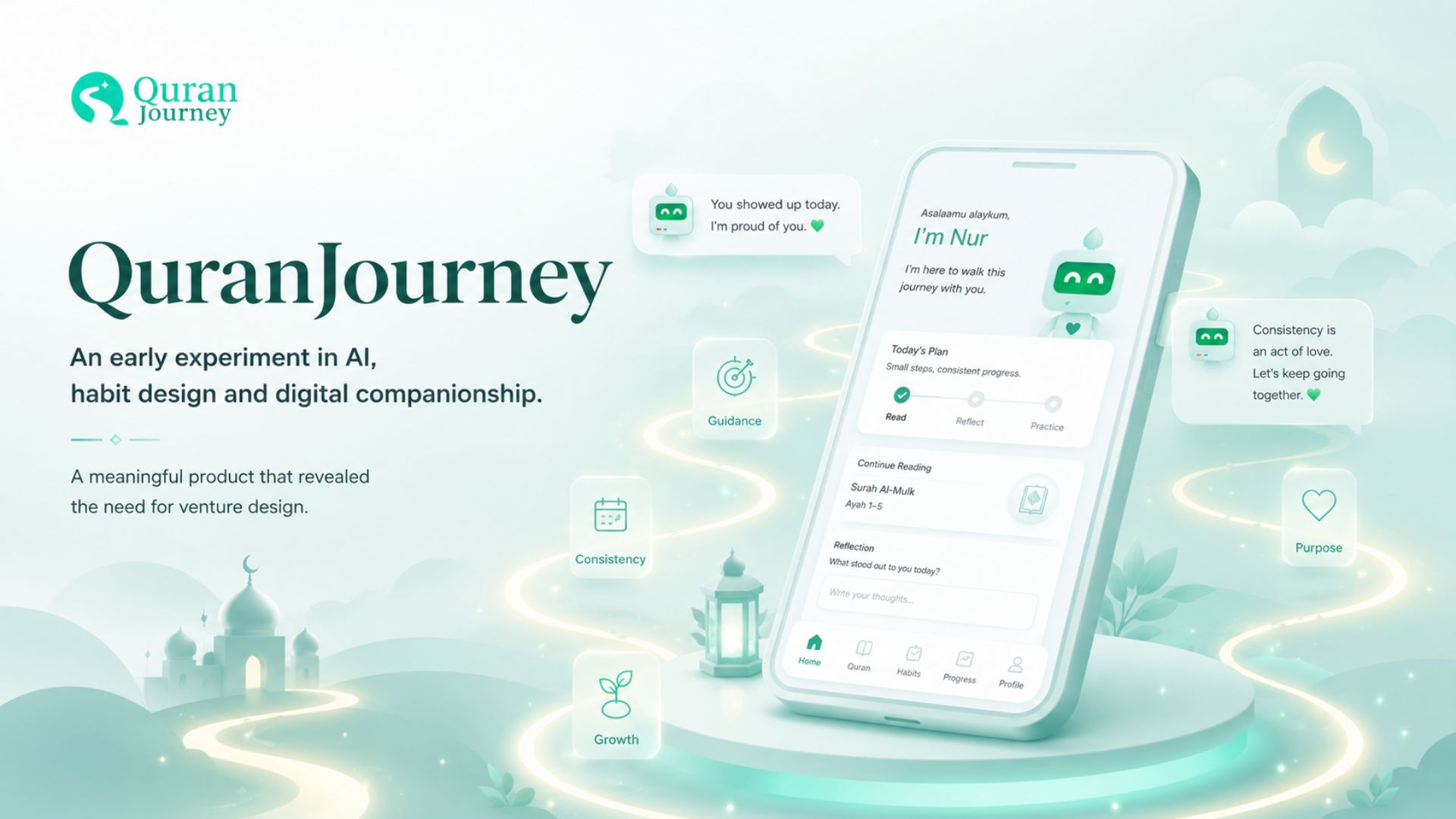
QuranJourney was a mobile learning and habit-building platform centred on regular moments of reading, reflection and inspiration. At its heart was Nur, an early smart Quran assistant designed to accompany people through their journey without replacing teachers, scholars or community.
The team was four people working across disciplines and geographies: user research, design, content strategy, product thinking and software development. We did whatever needed doing, regardless of what our roles were called.
The product worked. People connected with it immediately. The warmth, the accessibility, the sense of being accompanied rather than instructed, it addressed something real. The gap between wanting a meaningful spiritual practice and finding the consistency to sustain it turned out to be a design problem, and we had designed something that helped close it.
The lesson that changed how I work
We had built a beautiful product. We had not built a sustainable venture around it.
Keeping it alive required continued investment in technology, content, governance, distribution and user support. None of that had a business model behind it. The product was useful, loved and technically ahead of its time, and it still couldn’t survive.
That distinction, between product desirability and venture viability, became one of the most consequential lessons of my career. A system is not just the thing you build. It is everything that has to exist around it for the thing to keep working.
QuranJourney pushed me well past UX and product design. I began asking not only how to design something people value, but what architecture has to surround it for that value to endure. That question is venture design. It is also, I would later understand, a version of the same question that runs through every AI transformation project: you can build the capability, but have you designed the system that will sustain, govern and evolve it?
Why this matters for the work I do now
QuranJourney was an early experiment in something the industry is now taking seriously, AI that accompanies rather than replaces, that is designed around human relationship rather than engagement metrics, that asks what should this not do as seriously as it asks what can it do.
We were also, without the language for it at the time, doing responsible AI design, asking about trust, cultural context, the boundaries of automation, and the difference between what technology can do and what it should do.
Those questions didn’t go away when the project ended. They became the frame I bring to every system I work on now.
The technology is rarely the hardest part. The hardest part is designing the human layer, the governance, the relationships, the operating model, the cultural conditions, that determines whether what you build actually holds.
That is what QuranJourney taught me and it is, in different forms, the problem I work on with every leader and organisation I advise today.
Copyright @ Zahara Chetty PTY LTD 2026