Case Study: Designing an Afrofuturist founder experience
for the MultiChoice Africa Accelerator


Building the Futures We Deserve
Most accelerators begin with the assumption that the destination is already agreed. Build a scalable company. Secure capital. Grow as fast as possible.
That model has produced a great deal. It has also produced a particular kind of founder — one who has internalised a specific image of what success looks like, where it comes from, and whose problems are worth solving. That image was not designed in Africa. It was imported, largely unexamined, and applied to contexts it was never built for.
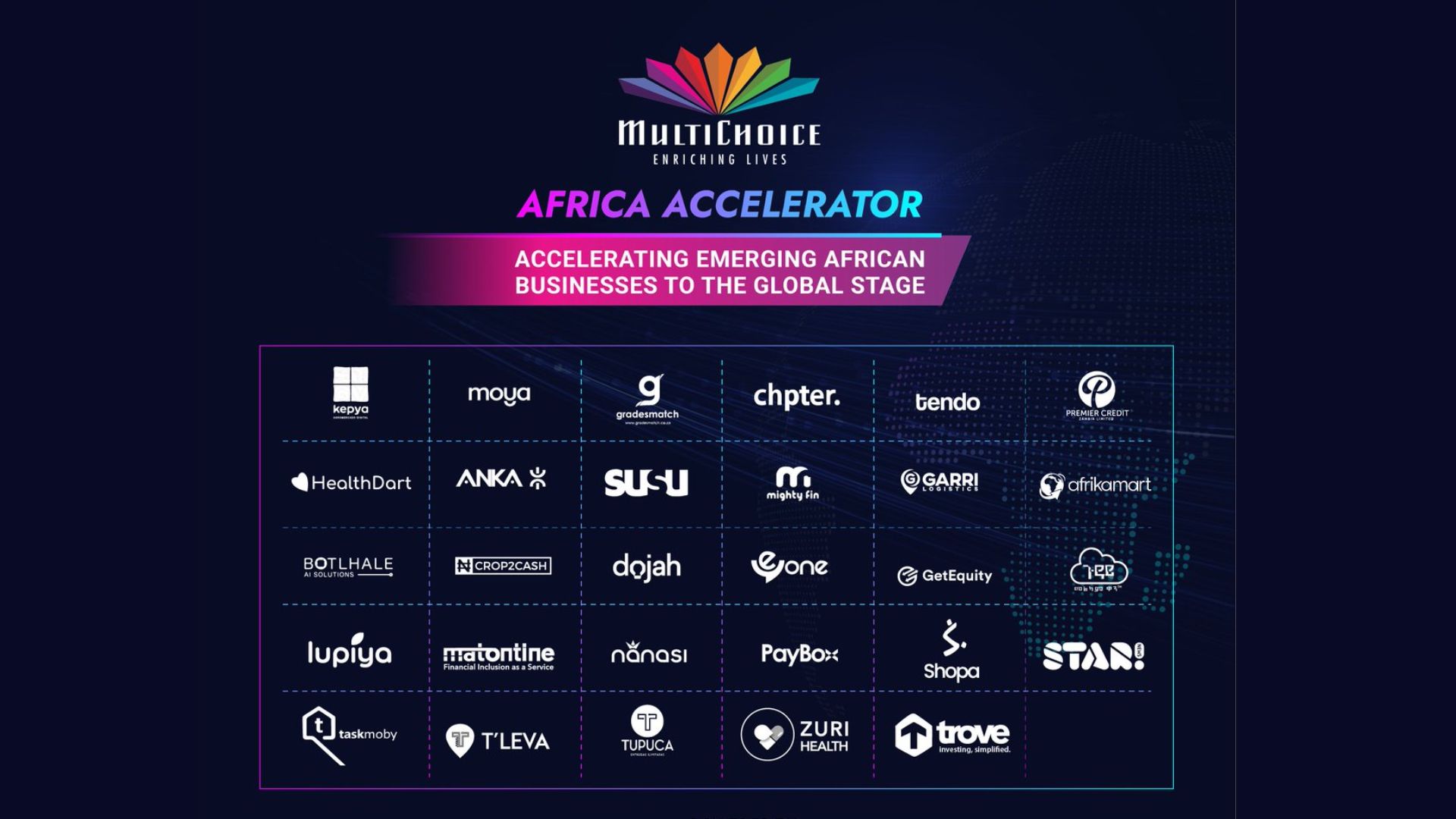
In 2022, I joined the MultiChoice Africa Accelerator as a founder selection panelist, programme designer and the creator and facilitator of its opening module. The programme was working with established African founders, ventures already operating, preparing for investment and scale. My contribution was to ask, before any of the business model work began, “What futures are these founders actually building towards, and do they know it?”
The design challenge
The MultiChoice Africa Accelerator brought together founders from across the continent in healthtech, agriculture, finance, education, the circular economy, creative industries. These were not first-time entrepreneurs with untested ideas. They were operators with real businesses and real decisions ahead of them.
They didn’t need inspiration, they needed practical support: sharper propositions, better customer understanding, stronger business models, investor-ready communication.
Yet, there was a deeper opportunity that a conventional accelerator would miss entirely. Before asking founders how they would scale, I wanted to ask them what kind of future their venture was helping to create, and whether that future was one they had consciously chosen, or one they had inherited from frameworks built somewhere else.
The question mattered because the assumptions formed at the beginning of a venture eventually show up in everything, its products, its culture, its ownership structure, its distribution of value, its relationship to the communities it claims to serve. Founder worldview is not a soft introduction before the real business work begins. It is part of the venture architecture.
Beginning with Afrofuturism
I designed and taught the opening module, Afrofuturism for Social Innovation and Entrepreneurship.
Starting there was a deliberate choice. Most accelerators begin with the market, the customer or the business model. We began with the future and with the question of who gets to imagine it.
Afrofuturism is often understood as an artistic genre. Science fiction, Afrobeat aesthetics, the visual language of a continent reimagined through speculative possibility. That is part of it, but as an entrepreneurial lens, it does something more precise. It makes visible the relationship between imagination, culture, technology and power.
Who builds the technology of the future? Which worldview is embedded in it? Why are African communities so often positioned as recipients of innovation rather than authors of it? What would it mean to build from the continent’s own realities, histories and values, without limiting the ambition to serve the world?
These are not philosophical questions for their own sake. They are strategic ones. A founder who has never examined these questions will make product decisions, hiring decisions, partnership decisions and pricing decisions based on assumptions they didn’t choose and a founder who has examined them builds differently.
Futures thinking as a practical tool
The module introduced futures literacy not as a way to predict what will happen, but as a way to use the future as a creative space, to expand the range of possibilities a founder is designing for.
I introduced four alternative futures archetypes.
- Growth, in which current patterns continue and amplify;
- Constraint, in which new limits reshape how systems function;
- Collapse, in which disruption causes existing systems to fail; and
- Transformation, in which a fundamental shift makes a genuinely different system possible.
Founders applied these to their own sectors. They identified the forces of change most relevant to their work, developed plausible versions of the future rather than assuming the present would continue in a straight line, and asked, “Which future appears most likely? Which is most desirable? Who benefits in each scenario, and who might be harmed or excluded?”
This is not an abstract exercise. It directly changes the decisions a founder makes today. A logistics venture that has thought through a constrained-fuel scenario builds differently. An edtech company that has imagined a transformation scenario for African education makes different product bets. A healthtech founder who has asked who benefits in each future is less likely to build something that optimises for the paying customer at the expense of the patient.
I also introduced the distinction between dystopia, utopia and protopia, the idea that founders don’t need to solve every systemic challenge through a single venture. They can identify a more desirable direction and build one deliberate step towards it. The venture becomes a prototype of a different future. That reframe changed something in the room every time.
Selecting for depth, not polish
My involvement began in the selection process, interviewing founders presenting their businesses for consideration.
Those conversations taught me something I’ve carried into every assessment context since. A polished pitch does not reveal the depth of a founder’s understanding of their problem. A founder with a genuinely valuable and contextually relevant idea may not yet have the language, the structure or the confidence to communicate its potential. The selection process sits at the intersection of evaluation and inquiry, and the most important question is rarely the one the founder came prepared to answer.
I was looking for founders who understood the problem they were solving at a level that went beneath their slide deck. Founders who had thought about who carries the risk in their model, not just who captures the value. Founders whose ambition was legible in the quality of their thinking, not just the size of their projections.
What this work confirmed
The MultiChoice accelerator reinforced something the Values based Venture framework had made explicit and the smart assistant had taught through failure, the assumptions you build into a venture at the beginning are very difficult to redesign later.
Founder mindset is not a warm-up, it is infrastructure. The futures a founder can imagine set the ceiling on the futures their venture can create and most founder development programmes spend almost no time on this because it is harder to measure than a pitch score, and slower to produce than a business model canvas.
The work also showed me that futures literacy is not only an educational capability, it is a strategic one. Founders who can imagine multiple plausible futures, examine who benefits in each, and make deliberate choices about which future they are building towards, these founders make better decisions under uncertainty. Which is to say they make better decisions in the actual conditions of building a venture.
That is the capability I was trying to develop. Not optimism about Africa’s potential, there is no shortage of that, but the rigorous, practical ability to act as an author of the future rather than a subject of it.
Why this matters for the work I do now
The question I brought into the MultiChoice accelerator is the same question I bring into every strategic engagement, before we design the solution, have we examined the future we are designing towards?
In AI transformation work, this question is urgent in ways it wasn’t five years ago. The decisions organisations are making right now about AI adoption, which workflows to automate, which human judgements to replace, which operating models to build, are not reversible on a short timeline. They are being made, in most cases, without a clear picture of the futures they are creating. Without asking who benefits, who carries the risk, what gets strengthened and what gets quietly eroded.
Futures literacy is not a luxury for enterprise leaders. It is a prerequisite for making consequential decisions responsibly. The Afrofuturism module was built for African founders navigating uncertain markets. The underlying discipline applies everywhere people are building systems that will shape other people’s lives.
It applies almost everywhere I work.
Copyright @ Zahara Chetty PTY LTD 2026