Author : zaharachetty

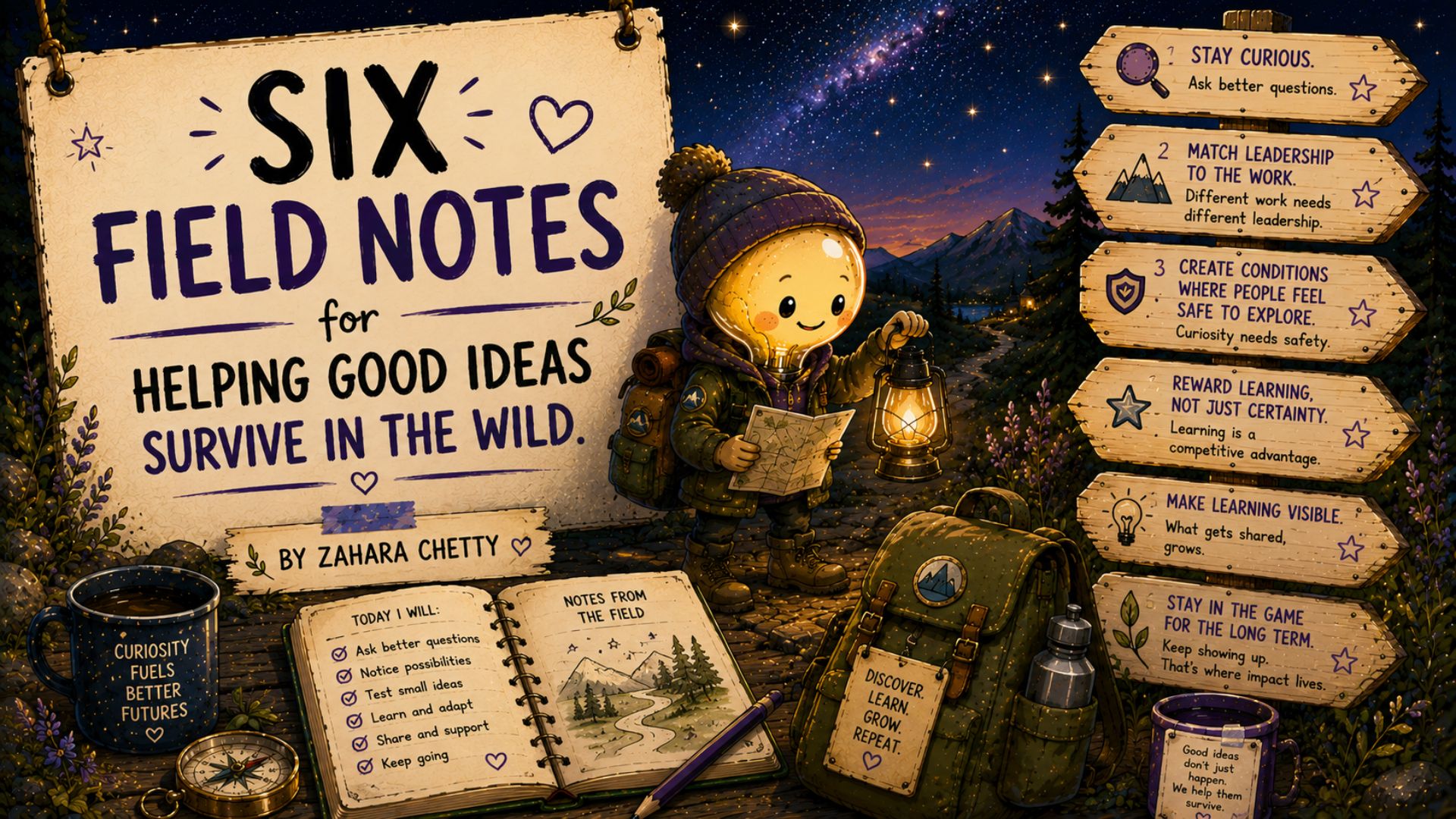
The wild work of discovery: Why good ideas die and six field notes for keeping them alive

We love to obsess over structures. It isn’t only Agile. Design Thinking, Lean, OKRs, SAFe, we reach for frameworks the way nervous people reach for a handrail, and then we forget they were ever optional. A method that started as one good answer to one specific problem slowly hardens into the way things are simply done. Agile is just the clearest example, because it’s the one we’ve canonised hardest. It was built to solve a real problem in enterprise software delivery.

However, it’s worth remembering the room it came from. Seventeen people, nearly all of them white, middle-aged, Western men, writing for enterprise software delivery as they knew it in 2001. That doesn’t make their thinking wrong. It makes it situated, and a situated snapshot is a strange thing to treat as universal law, decades later, across contexts those authors never had in front of them.

Genuinely new work, especially in AI, especially now, doesn’t behave like that. The roadmap is often unclear. The most valuable outcome is sometimes learning what not to build. Progress can look like disproving an assumption before it turns into an expensive mistake.
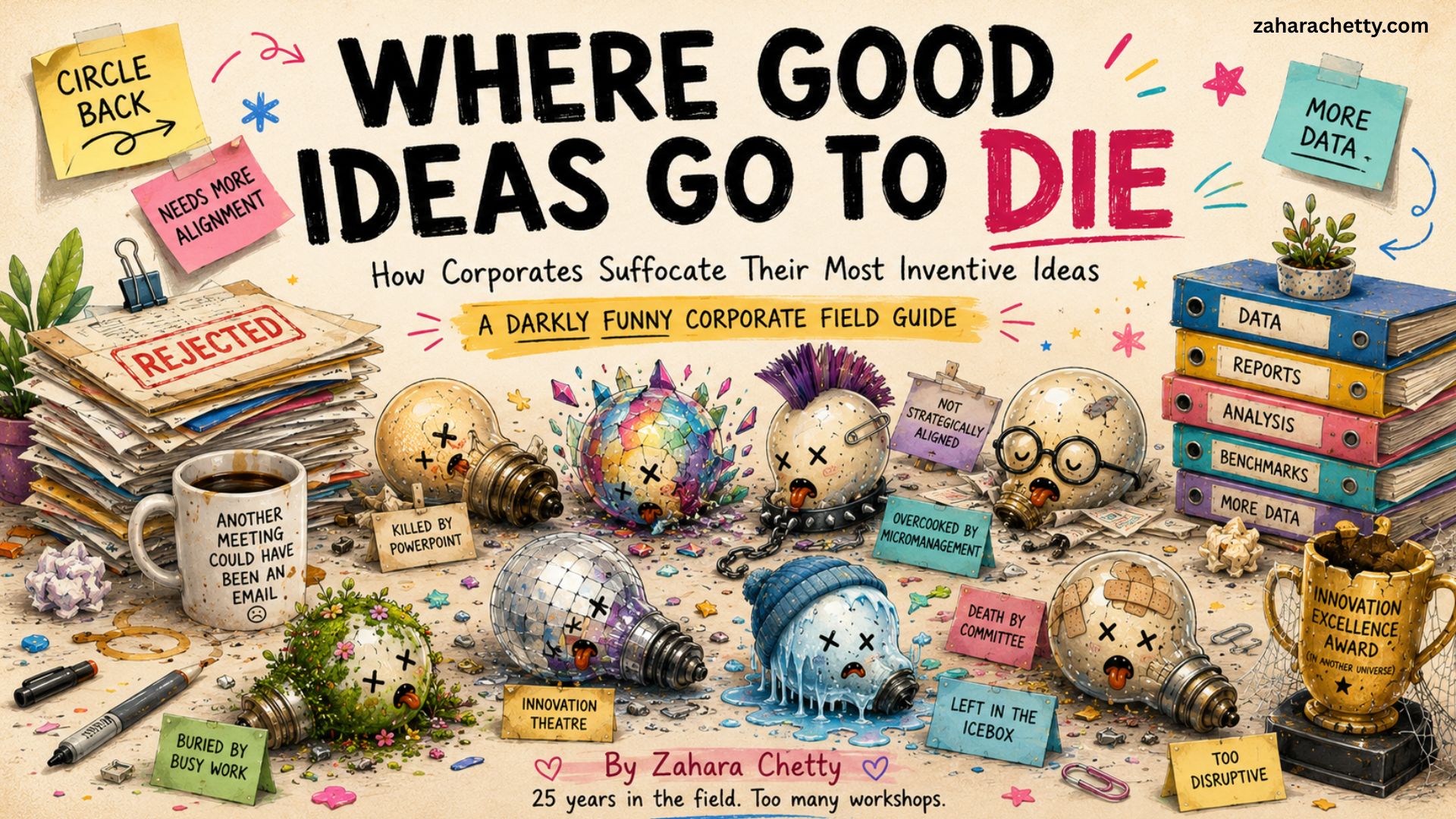
Where good ideas go to die

The book is dedicated to “the brave ideas that arrived hopeful, attended 47 meetings, and quietly lost the will to live.”

That line is the closest thing the book has to a thesis. The ideas are not dying because they are bad. They are dying because the systems they are arriving in were never designed to absorb anything genuinely new. The systems were designed to look like they were absorbing something new, which is a different thing.

Innovation theatre is the performance of innovation in the absence of any actual change to budgets, reporting lines, power, risk, process, or strategy. The performance is the point. The change is the threat. Anyone who has worked inside a large organisation for more than two years has watched this happen, and most have eventually taken part in it because they could not see another way to keep the work moving.

Case Study: The African Futures Academy

From futures literacy to a founder-support system for Africa’s new economy. The African Futures Academy began as an experiment in helping young Africans see themselves as authors of the future, not simply recipients of futures designed elsewhere. Through learning experiences, public conversations and the Awesome Africans series, I explored how futures thinking, identity, ethical imagination and African role models could strengthen agency and expand what young people believed was possible.
The work revealed a deeper challenge. imagination and future literacy are essential, but they are not enough. Emerging founders also need practical support to test ideas, build viable ventures, access markets and capital, and sustain themselves through the realities of building. The Academy is now informing the design of a more joined-up support system for founders creating Africa’s next economy.

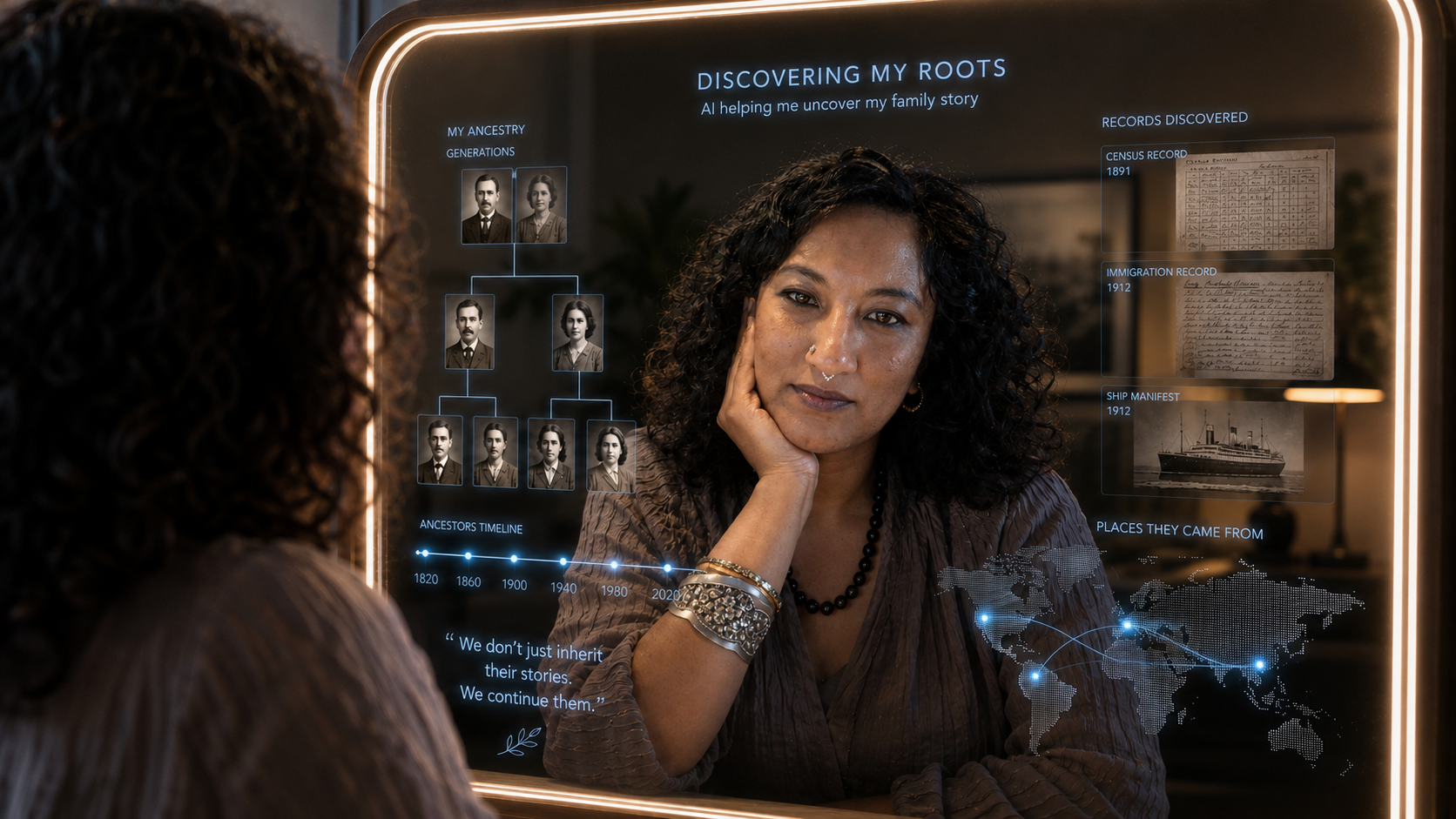
Bloodlines in the Cloud: When the Algorithm Meets the Ancestor

Menu Home About Participatory Futures Case Studies Case Study 1: Agentic AI Hub Case Study 2: Afrofuturist Accelerator Case Study: African Futures Academy Case Study: Value Based Ventures Speaking Blog Bloodlines in the Cloud: When the Algorithm Meets the Ancestor A Journey Through Code, Kin, and Remembering Growing up, there were many gaps in my […]

Who Writes the Story of the Future?

Every civilisation is ultimately shaped by the stories it tells about what humans are for.

If we treat consciousness itself as something to automate, optimise, outsource, and accelerate, we may eventually produce a world that is remarkably efficient yet existentially empty. You can already feel it happening, the world is filling with things and emptying of meaning. It is becoming a place where humans retain productivity but lose participation, where we consume statistically generated meanings rather than make meaning together.

The danger is not just that AI will write our emails or our dating profiles, the danger is that we slowly stop writing ourselves.

So the question is not whether to use these tools, they are already here, and they will keep arriving. Heck, I am even building them myself! The question is what we refuse to outsource, what we insist on doing ourselves, badly, slowly, with our whole attention, because the doing of it is the point.

Write the difficult message yourself, have the awkward conversation you’ve been avoiding, or keep having the ones with no agenda. Sit with the question before you ask the machine to answer it and let a thought take its time. Notice when you are reaching for a tool to spare you the discomfort of being human, and choose the discomfort sometimes anyway.

The future will not belong to those who use AI most fluently, though many will tell you it will. The future will belong to those who remember what only humans can do, and keep doing it on purpose, who refuse to automate the parts of life that were never meant to be efficient, who treat their attention, their voice, their relationships, and their consciousness as the last sovereign territory in a world that wants to colonise all of it.

Being human was always a practice and now it is becoming a choice.

Scroll to top