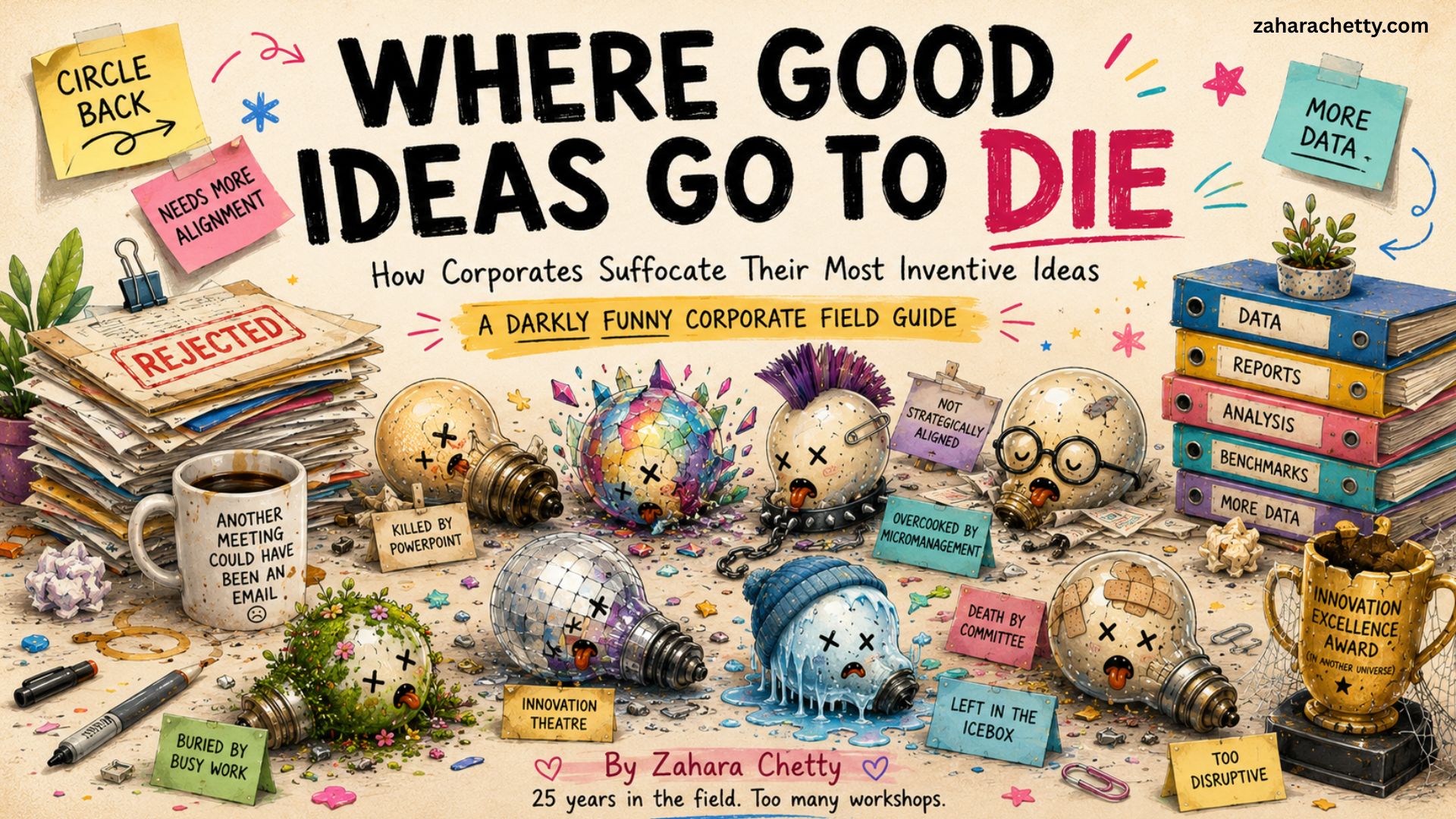
The wild work of discovery: Why good ideas die and six field notes for keeping them alive
We love to obsess over structures. It isn’t only Agile. Design Thinking, Lean, OKRs, SAFe, we reach for frameworks the way nervous people reach for a handrail, and then we forget they were ever optional. A method that started as one good answer to one specific problem slowly hardens into the way things are simply done. Agile is just the clearest example, because it’s the one we’ve canonised hardest. It was built to solve a real problem in enterprise software delivery.
However, it’s worth remembering the room it came from. Seventeen people, nearly all of them white, middle-aged, Western men, writing for enterprise software delivery as they knew it in 2001. That doesn’t make their thinking wrong. It makes it situated, and a situated snapshot is a strange thing to treat as universal law, decades later, across contexts those authors never had in front of them.
Genuinely new work, especially in AI, especially now, doesn’t behave like that. The roadmap is often unclear. The most valuable outcome is sometimes learning what not to build. Progress can look like disproving an assumption before it turns into an expensive mistake.